
Corrugated cardboard material UK is one of the most widely used packaging materials for shipping, storage, retail packaging and e-commerce deliveries. Manufactured from linerboard and fluting paper, corrugated board combines lightweight construction with outstanding strength, making it suitable for protecting products throughout the supply chain. Consequently, businesses across the UK rely on corrugated packaging to reduce product damage while improving transport efficiency.
Unlike standard cardboard packaging material UK, corrugated material contains a fluted medium sandwiched between linerboards. This engineered structure creates excellent cushioning, stacking strength and compression resistance. Therefore, corrugated cardboard material is widely used for shipping cartons, custom mailer boxes, transit outers, retail packaging and export packaging.
At Sky Print and Enterprise, we manufacture premium corrugated packaging UK for businesses requiring reliable protection, high-quality printing and sustainable packaging solutions. Whether you require single wall cartons, luxury printed corrugated boxes or heavy-duty double wall packaging, our experts help you select the most suitable board grade, flute profile and structural design for your products.
On this page, you’ll learn everything about corrugated cardboard material UK, including how corrugated board is manufactured, different corrugated material types, flute profiles, corrugated board grades, linerboards, fluting paper, GSM, thickness, strength tests, printing options, sustainability and how to choose the right corrugated packaging for your business.
Need Custom Corrugated Packaging?
Whether you need shipping cartons, retail packaging, mailer boxes or heavy-duty export packaging, we manufacture bespoke corrugated boxes with premium printing, custom sizes and fast UK delivery.
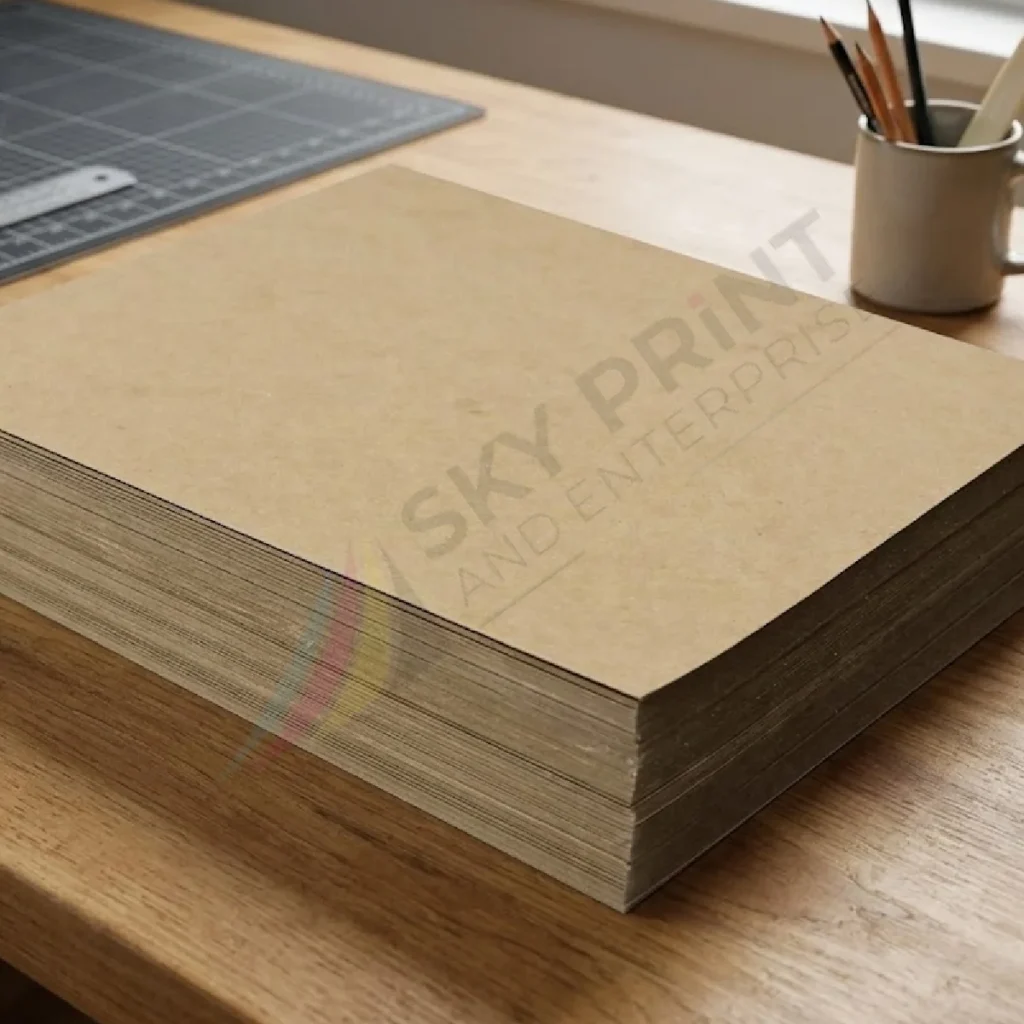
Corrugated cardboard material UK used for custom shipping, retail and e-commerce packaging.
Table of Contents
- What Is Corrugated Cardboard Material UK?
- How Corrugated Cardboard Material Is Manufactured
- Structure of Corrugated Cardboard Material UK
- Types of Corrugated Cardboard Material UK
- Corrugated Cardboard Flute Types Explained
- Corrugated Flute Comparison Guide
- Best Corrugated Flute for Every Application
- How to Choose the Right Corrugated Cardboard Material UK
- Liner Boards in Corrugated Cardboard
- Advantages of Corrugated Cardboard Material UK
- Corrugated Cardboard Thickness (GSM & Strength)
- Corrugated Board Grades, Strength & Material Specifications
- Latest Trends in Corrugated Cardboard Packaging UK
- Corrugated Packaging Applications Across Different Industries
- Why Corrugated Board Remains the Industry Standard
- Get Custom Corrugated Packaging for Your Business
- FAQs About Corrugated Cardboard Material UK
What Is Corrugated Cardboard Material UK?
Corrugated cardboard material UK, also known as corrugated board or corrugated fibreboard, is a high-strength packaging material manufactured by bonding one or more layers of fluting paper between flat linerboards. This unique construction creates a lightweight yet exceptionally durable board that protects products from impacts, vibration and compression during storage and transportation.
Unlike ordinary paperboard, corrugated material contains air pockets created by the fluted medium. Consequently, it provides significantly greater cushioning while remaining lightweight. This combination of strength and low weight makes corrugated packaging the preferred choice for shipping cartons, e-commerce packaging, retail displays and industrial transport packaging.
Overall, modern corrugated packaging UK is available in numerous board grades, flute profiles and wall constructions. As a result, manufacturers can produce packaging suitable for everything from lightweight cosmetics to heavy industrial machinery. Businesses also benefit from excellent printability, custom structural designs and sustainable manufacturing.
In addition, if you are comparing different packaging materials, you can also explore our complete guide to packaging materials UK, cardboard packaging material UK and kraft packaging material UK to understand which solution best suits your products.
How Corrugated Cardboard Material UK Is Manufactured
The manufacturing process combines carefully engineered paper materials with specialised machinery to produce strong, lightweight corrugated board. Although the process appears simple, every stage influences the board’s strength, print quality and overall performance.
1. Producing Linerboard
First, the process begins by manufacturing linerboard from virgin kraft fibres, recycled fibres or a combination of both. These outer layers provide surface strength, printability and protection against external damage.
2. Manufacturing Fluting Paper
Next, manufacturers produce fluting paper, sometimes called the corrugated medium. This specialised paper passes through heated corrugating rollers that create the familiar wave-shaped flute pattern. These flutes act as tiny columns, providing excellent compression strength while absorbing impacts during transport.
3. Bonding the Layers
The corrugated medium is then bonded to linerboards using starch-based adhesives. Depending on the required performance, manufacturers create single face, single wall, double wall or triple wall corrugated board.
4. Drying and Quality Inspection
After bonding, the board passes through heated drying sections before undergoing quality checks for moisture content, board thickness, flute consistency, bursting strength and compression performance.
5. Conversion into Packaging
Finally, large corrugated sheets are printed, die-cut, creased, folded and glued into finished packaging products such as shipping cartons, retail boxes, transit outers and custom printed corrugated packaging.
Because this manufacturing process creates an excellent balance between strength, weight and sustainability, corrugated cardboard material UK remains one of the most widely used packaging materials across retail, food, e-commerce, manufacturing and logistics industries.
Structure of Corrugated Cardboard Material UK
The outstanding performance of corrugated cardboard material UK comes from its engineered multi-layer construction rather than the paper itself. Unlike ordinary cardboard packaging material, corrugated board combines flat linerboards with a fluted inner layer that distributes pressure evenly across the surface. Consequently, the board provides exceptional protection while remaining surprisingly lightweight.
However, every layer performs a specific function. The outer linerboards provide durability, printability and moisture resistance, whereas the fluted centre creates cushioning and compression strength. Together, these layers produce a packaging material capable of protecting products throughout manufacturing, warehousing, transportation and retail display.
Because manufacturers can alter flute profiles, linerboard grades and wall construction, corrugated material can be engineered for almost any packaging application. Therefore, businesses can balance strength, appearance, weight and cost according to their specific requirements.
Outer Linerboard
The outer linerboard forms the visible surface of the packaging. Besides protecting the fluted core, it provides an excellent surface for flexographic, digital and offset printing. White linerboards are often selected for premium retail packaging, whereas brown kraft linerboards offer greater durability and a natural appearance.
Fluting Paper
The centre layer consists of fluting paper, also called the corrugated medium. During manufacturing, this paper passes through corrugating rollers that create the characteristic wave pattern. These flutes behave like miniature support columns that absorb impacts while resisting crushing forces.
As a result, the fluting paper contributes significantly to the strength of corrugated board without adding excessive weight. This explains why corrugated packaging is both economical and highly protective.
Adhesive Bonding
Manufacturers bond the linerboards and fluting medium using starch-based adhesives. Once cured, these adhesives create a rigid structure capable of withstanding heavy stacking loads during storage and transportation.
Similarly, depending on the application, manufacturers may combine several linerboards and multiple fluted layers to produce stronger corrugated material types for industrial packaging.
Linerboard vs Fluting Paper
Many businesses search for terms such as fluting paper, containerboard fluting and fluting medium without fully understanding how these materials differ. Although both are manufactured from paper fibres, each performs a completely different role within corrugated cardboard.
| Material | Primary Function | Main Characteristics | Typical Use |
|---|---|---|---|
| Linerboard | Outer protective surface | Smooth, printable and durable | Retail packaging, shipping cartons and printed boxes |
| Fluting Paper | Creates the corrugated wave | Excellent compression and cushioning | Internal structural support |
However, in most corrugated board constructions, linerboard protects the product externally while the fluting medium absorbs impacts internally. Consequently, the combination produces a packaging material that performs significantly better than flat paperboard alone.
Manufacturers select different linerboard grades according to printing requirements, moisture resistance and strength. Likewise, different fluting paper grades affect compression strength, stacking performance and cushioning ability.
Furthermore, if your packaging focuses on high-quality graphics and branding, you may also compare cardboard packaging material UK, which offers an exceptionally smooth printing surface for retail cartons.
What Is Corrugated Medium?
Corrugated medium is another name for the specialised fluting paper positioned between the linerboards. After passing through heated corrugating rollers, the paper forms continuous waves called flutes, which create air pockets throughout the board.
These air pockets perform several important functions. Firstly, they absorb vibration during transportation. Secondly, they distribute pressure evenly across the packaging. Thirdly, they improve thermal insulation while keeping the packaging lightweight.
Because of these characteristics, the corrugated medium is largely responsible for the excellent performance of corrugated fibreboard and corrugated cardboard material UK.
Modern corrugated medium is manufactured using carefully controlled paper grades that balance flexibility with compression strength. Furthermore, many UK manufacturers now incorporate recycled fibres to improve sustainability without compromising performance.
How Corrugated Cardboard Material UK Is Manufactured
Understanding how corrugated cardboard material UK is manufactured helps businesses choose stronger, more reliable packaging for their products. Although corrugated board appears simple from the outside, it is actually an engineered packaging material designed to provide strength, cushioning and durability while remaining lightweight. Every stage of the manufacturing process influences the finished board’s performance, print quality and shipping capability.
Unlike solid cardboard packaging material, corrugated board combines multiple paper layers to create a structure that absorbs impact and distributes weight efficiently. As a result, manufacturers can produce packaging that protects everything from lightweight cosmetics to heavy industrial equipment. Moreover, the production process allows different flute sizes, liner grades and board constructions to be manufactured for specific applications.
Moreover, the manufacturing process begins with high-quality paper materials and finishes with precision-cut corrugated packaging ready for printing, die-cutting and box conversion.
1. Raw Materials Used for Corrugated Cardboard Material UK
Corrugated cardboard begins with two primary paper components: linerboard and fluting paper, which is also known throughout the packaging industry as the corrugated medium. Together, these materials create the finished corrugated fibreboard used across shipping, retail and industrial packaging.
Linerboard forms the flat outer surfaces of the board. Meanwhile, fluting paper creates the wave-shaped middle layer that provides cushioning and compression strength. Consequently, combining these materials produces packaging that is both lightweight and exceptionally durable.
Manufacturers may use virgin kraft fibres, recycled fibres or a combination of both depending on the required board grade, product weight and sustainability objectives.
- Virgin kraft linerboard for maximum strength
- Recycled test liner for economical packaging
- Fluting paper manufactured specifically for cushioning
- White-top linerboard for premium printing
- Moisture-resistant linerboard for demanding environments
Overall, these paper grades directly influence the finished corrugated board’s durability, print quality and stacking performance.
2. Forming the Corrugated Medium
The heart of corrugated cardboard is the fluted centre layer. During production, fluting paper passes through heated corrugating rollers that create the familiar wave pattern known as the corrugated medium. These flutes act like miniature support columns, allowing the board to absorb shocks while maintaining structural rigidity.
Different roller profiles produce different flute sizes, including A Flute, B Flute, C Flute, E Flute, F Flute and micro flute cardboard. Each flute profile delivers different cushioning characteristics, compression strength and print performance. Therefore, selecting the correct flute is one of the most important decisions when designing corrugated packaging.
3. Bonding the Linerboard and Fluting Paper
Once the corrugated medium has been formed, manufacturers apply a starch-based adhesive before bonding it to the linerboard. This creates a single-face corrugated sheet. Depending on the required strength, additional linerboards and corrugated mediums may then be added to manufacture single wall, double wall or triple wall corrugated board.
Modern production lines use precisely controlled temperatures, pressure and adhesive application to ensure strong bonding throughout the board. Consequently, the finished material delivers consistent strength across the entire sheet.
4. Drying and Board Stabilisation
After bonding, the corrugated sheets pass through heated drying sections where moisture is removed and the adhesive fully cures. This stage stabilises the board and prevents warping during later printing and conversion processes. Furthermore, careful moisture control ensures that corrugated packaging maintains its strength throughout storage and transportation.
5. Printing, Cutting and Box Conversion
Once the corrugated board has been manufactured, it moves to the conversion stage. Depending on the packaging specification, manufacturers may print directly onto the board using flexographic printing or apply litho-laminated sheets for premium graphics. Afterwards, die-cutting equipment produces the required box style before gluing, folding or stitching completes the finished packaging.
This manufacturing process enables businesses to produce everything from simple corrugated transit outers to high-quality printed retail packaging, shelf-ready packaging and custom e-commerce mailer boxes.
The strength of corrugated cardboard depends not only on its thickness but also on the quality of the linerboard, the grade of the fluting paper, flute profile, adhesive bonding and overall board construction. Two corrugated boards with similar thicknesses can perform very differently depending on how they are manufactured.
Types of Corrugated Cardboard Material UK
Not every packaging application requires the same level of protection. Consequently, manufacturers produce several different corrugated material types, each designed for particular weight ranges, shipping conditions and product categories.
Choosing the correct board construction improves product protection while avoiding unnecessary material costs. Therefore, understanding each type helps businesses select the most appropriate packaging solution.
Single Face Corrugated Board
Single face corrugated consists of one linerboard bonded to one fluted medium. Because one side of the flute remains exposed, this construction is rarely used for finished cartons. Instead, manufacturers use it as protective wrapping for furniture, glass, industrial components and delicate surfaces.
Its flexibility allows it to wrap around irregular products while still providing cushioning against impacts and scratches.
Single Wall Corrugated Board
Single wall board is the most common corrugated board used throughout the UK packaging industry. It consists of two linerboards with one corrugated medium positioned between them.
Likewise, this structure offers an excellent balance of strength, weight and cost. Consequently, businesses widely use single wall corrugated packaging for:
- Custom mailer boxes
- Shipping cartons
- E-commerce packaging
- Retail packaging
- Subscription boxes
- General warehouse packaging
Double Wall Corrugated Board
Double wall corrugated board combines three linerboards with two layers of fluting. As a result, it provides considerably greater stacking strength and impact resistance than single wall packaging.
Moreover, businesses typically select double wall corrugated packaging for:
- Fragile products
- Industrial equipment
- Heavy retail products
- Export packaging
- Long-distance transportation
Although double wall packaging costs slightly more, it significantly reduces transit damage for heavier products.
Triple Wall Corrugated Board
Triple wall corrugated board represents the strongest standard corrugated construction available. It combines four linerboards with three separate fluting mediums to create an exceptionally rigid packaging material.
Manufacturers commonly use triple wall corrugated board for:
- Industrial machinery
- Automotive components
- Bulk exports
- Chemical containers
- Palletised loads
- Heavy engineering products
Because of its outstanding compression strength, triple wall corrugated board can often replace timber crates while reducing transport weight and shipping costs.
Expert Tip
For most retail and e-commerce businesses, single wall corrugated board provides the ideal balance between protection, print quality and cost. However, products weighing over 15–20 kg or travelling long distances generally benefit from double wall corrugated packaging for improved durability and reduced transit damage.
Corrugated Cardboard Material UK Grades, Strength & Specifications
Not all corrugated board is manufactured to the same specification. Although two corrugated boxes may appear identical, they can perform very differently depending on the linerboard quality, fluting paper, board construction and fibre composition. Therefore, understanding corrugated cardboard grades helps businesses select packaging that offers the right balance of protection, print quality and cost.
Within the packaging industry, manufacturers classify corrugated board according to the quality of the linerboard, the strength of the corrugated medium and the overall board construction. Consequently, the board grade determines how much weight a carton can carry, how well it stacks during storage and how effectively it protects products throughout transportation.
Whether you manufacture retail packaging, corrugated transit outers, export cartons or e-commerce mailer boxes, selecting the correct corrugated board grade is just as important as choosing the correct flute profile.
Virgin Kraft Linerboard
Virgin kraft linerboard is manufactured from long virgin wood fibres that provide exceptional strength and durability. Because these fibres remain longer than recycled fibres, they create stronger corrugated board with improved tear resistance and stacking performance.
Virgin kraft liners are commonly used for:
- Heavy-duty corrugated packaging
- Industrial shipping cartons
- Export packaging
- High-value products
- Corrugated transit outers
Although virgin kraft board generally costs more than recycled alternatives, it delivers excellent durability where maximum protection is essential.
Test Liner Board
Test liner is produced primarily from recycled paper fibres and is widely used throughout the corrugated packaging industry. It provides an economical solution for many retail and shipping applications while maintaining good structural performance.
Businesses often choose test liner for:
- Retail packaging
- E-commerce cartons
- Subscription boxes
- Mailer boxes
- General warehouse packaging
Modern recycled test liners offer excellent printability while supporting environmentally responsible packaging strategies.
White Top Corrugated Board
White top linerboard combines the structural strength of corrugated packaging with a bright white printable surface. As a result, it produces sharper graphics, vibrant colours and improved shelf appeal compared with standard brown kraft liners.
White top corrugated board is frequently selected for:
- Retail packaging
- Food packaging
- Cosmetic packaging
- Pharmaceutical packaging
- Premium printed corrugated boxes
Companies wanting premium branding without upgrading to rigid packaging often choose white top corrugated board.
Recycled Corrugated Board
Many modern corrugated materials contain a significant percentage of recycled fibre. Thanks to improvements in paper manufacturing, recycled corrugated board now delivers excellent performance for many commercial applications while reducing environmental impact.
Furthermore, recycled corrugated board supports circular economy initiatives because used cartons can be collected, processed and converted into new containerboard several times before the fibres eventually reach the end of their useful life.
Common Corrugated Board Grades
Packaging manufacturers use various board grades depending on the strength required. Although exact specifications vary between manufacturers, the following examples illustrate how different cardboard grades are commonly used throughout the packaging industry.
| Board Grade | Typical Construction | Common Applications |
|---|---|---|
| 125K | Lightweight kraft liner | Light retail cartons and promotional packaging |
| 150K | Medium-strength kraft liner | E-commerce boxes and general shipping cartons |
| 200K | Heavy-duty kraft liner | Industrial packaging and export cartons |
| Test Liner | Recycled fibre board | Retail packaging and everyday corrugated boxes |
| White Top Liner | White printable surface | Premium printed corrugated packaging |
How to Select the Right Corrugated Board Grade
Selecting the correct corrugated board grade depends on far more than product weight alone. Businesses should evaluate shipping distance, warehouse stacking, moisture exposure, printing requirements and overall packaging budget before making a final decision.
For example, lightweight retail products may only require standard recycled corrugated board. However, fragile electronics, automotive components and export shipments often require stronger kraft linerboard together with double wall or triple wall construction.
If your packaging includes premium branding, high-resolution graphics or retail display requirements, white top linerboard combined with E flute or F flute often delivers the best printing performance.
Choosing the correct cardboard grade can reduce transit damage, improve stacking performance, lower shipping costs and increase customer satisfaction. Rather than selecting packaging based solely on thickness, always consider board grade, flute profile, liner quality and intended application together.
Corrugated Board Strength Tests and Quality Standards
High-quality corrugated cardboard material UK is not selected by thickness alone. Professional packaging manufacturers also evaluate a range of laboratory tests that measure compression strength, stacking performance, moisture resistance and overall durability. These quality standards ensure that corrugated packaging performs consistently throughout storage, transportation and distribution.
Although two corrugated boards may look identical, they can produce completely different results during shipping. Therefore, manufacturers test every corrugated material before approving it for commercial production. Understanding these tests helps businesses choose packaging that protects products while avoiding unnecessary material costs.
Edge Crush Test (ECT)
The Edge Crush Test (ECT) is one of the most widely used measurements in the corrugated packaging industry. It measures how much pressure the edge of a corrugated board can withstand before collapsing.
Since shipping cartons are normally stacked on top of one another during transport and warehousing, ECT provides an excellent indication of stacking performance.
Higher ECT ratings generally provide:
- Better stacking strength
- Reduced box collapse
- Improved warehouse storage
- Greater protection during transportation
- Lower product damage rates
For businesses shipping products through courier networks, selecting the correct ECT rating is often more important than simply choosing a thicker corrugated board.
Box Compression Test (BCT)
The Box Compression Test (BCT) measures the maximum load a completed corrugated box can support before collapsing. Unlike ECT, which evaluates only the board itself, BCT measures the strength of the finished packaging after conversion.
This test is especially important for:
- Warehouse stacking
- Palletised shipments
- Export cartons
- Corrugated transit outers
- Industrial packaging
If products remain stacked for long periods, selecting packaging with sufficient BCT performance helps prevent crushing and costly product damage.
Burst Strength Test
The Burst Strength Test, sometimes called the Mullen Test, measures the pressure required to rupture the surface of corrugated fibreboard. This test evaluates how well the board resists punctures, impacts and concentrated loads during handling.
Packaging with higher burst strength is commonly used for:
- Heavy products
- Industrial equipment
- Automotive parts
- Machinery components
- Long-distance shipping
Although many modern packaging specifications rely primarily on ECT ratings, burst strength remains an important quality indicator for demanding applications.
Cobb Water Absorption Test
Moisture can significantly reduce the strength of corrugated cardboard. For this reason, manufacturers use the Cobb Test to measure how much water a linerboard absorbs within a specified period.
Lower water absorption provides several benefits:
- Improved moisture resistance
- Better dimensional stability
- Reduced board warping
- More reliable print quality
- Longer shelf life
Businesses shipping food products, chilled goods or products exposed to humid environments often specify corrugated materials with improved moisture resistance.
Flat Crush Test
The Flat Crush Test evaluates how much pressure the corrugated fluting can withstand before it begins to collapse. Since the fluted medium provides the majority of the board’s cushioning performance, maintaining flute integrity is essential for protecting products from impacts.
This test is particularly important when selecting:
- Micro flute cardboard
- E flute cardboard
- F flute cardboard
- Retail packaging
- Luxury corrugated packaging
Pin Adhesion Test
The Pin Adhesion Test measures how securely the linerboard is bonded to the corrugated medium. Strong adhesive bonding prevents the paper layers from separating during converting, printing and shipping.
Poor bonding can reduce compression strength and shorten the lifespan of corrugated packaging. Consequently, reputable manufacturers carefully monitor adhesive quality throughout production.
Moisture Content Testing
Maintaining the correct moisture level is essential for producing consistent corrugated board. Excess moisture weakens paper fibres, while overly dry board may crack during die-cutting or folding.
Professional manufacturers therefore monitor moisture levels continuously throughout production to ensure:
- Consistent board strength
- Smooth printing performance
- Accurate die cutting
- Reliable folding and gluing
- Long-term packaging stability
Why These Corrugated Board Tests Matter
Laboratory testing allows packaging engineers to match corrugated cardboard material UK to the exact requirements of each product. Rather than selecting packaging based solely on flute size or board thickness, manufacturers combine ECT ratings, burst strength, compression performance, moisture resistance and board construction to achieve the best balance of protection, sustainability and cost efficiency.
Whether you require corrugated packaging for retail products, export shipments, pharmaceuticals or e-commerce deliveries, understanding these quality standards helps ensure your packaging performs reliably throughout the supply chain.
The strongest corrugated packaging is not necessarily the thickest. Board grade, flute profile, liner quality, adhesive bonding and laboratory test results all work together to determine the overall performance of corrugated fibreboard. Selecting the correct specification can reduce shipping damage, improve warehouse efficiency and lower packaging costs.
Corrugated Cardboard Flute Types
The flute profile is one of the most important factors affecting the performance of corrugated cardboard material UK. Flutes are the wave-shaped arches formed from fluting paper during the manufacturing process. Their size, height and frequency determine the board’s cushioning, compression strength, stacking performance and printability.
Because every product has different packaging requirements, manufacturers have developed several cardboard flute types. Some provide maximum cushioning for fragile products, whereas others create smoother printing surfaces for retail packaging. Therefore, selecting the correct flute profile improves protection while avoiding unnecessary packaging costs.
The most common corrugated flutes used throughout the UK packaging industry are A, B, C, E and F flute. Additionally, several micro flute boards have become increasingly popular for premium retail packaging.
A Flute Corrugated Cardboard Material UK
A flute corrugated cardboard is the thickest standard flute profile and provides outstanding cushioning and compression strength. Because the flute arches are relatively high, they absorb impacts extremely well during transportation.
As a result, A flute remains an excellent choice for products that require maximum protection throughout shipping and storage.
Typical applications include:
- Heavy industrial products
- Glass products
- Ceramics
- Fragile equipment
- Export packaging
- Large shipping cartons
Main advantages
- Excellent cushioning
- High stacking strength
- Superior shock absorption
- Ideal for heavy products
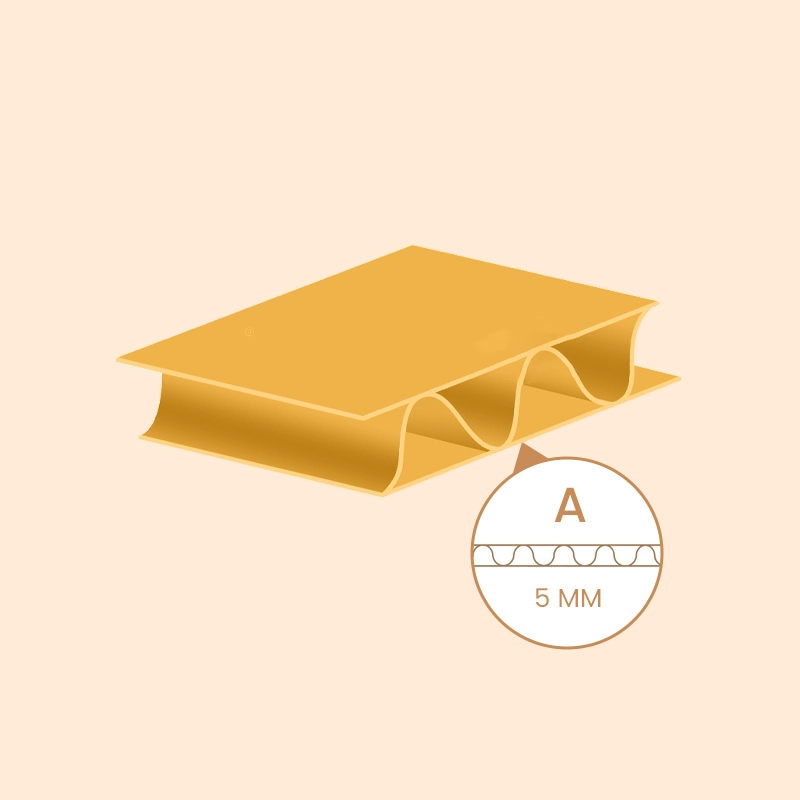
A flute corrugated board provides maximum cushioning for heavy and fragile products.
B Flute Corrugated Cardboard Material UK
B flute cardboard contains shorter and more closely spaced flutes than A flute. Consequently, it offers excellent crush resistance while creating a flatter surface for printing.
Many businesses select B flute because it balances durability with presentation. Therefore, it is widely used for retail packaging, die-cut boxes and branded packaging.
Common applications
- Retail packaging
- Die-cut cartons
- Custom mailer boxes
- Cosmetic packaging
- Food packaging
- Subscription boxes
Main advantages
- Excellent crush resistance
- Good print quality
- Reduced board thickness
- Suitable for automated packing lines
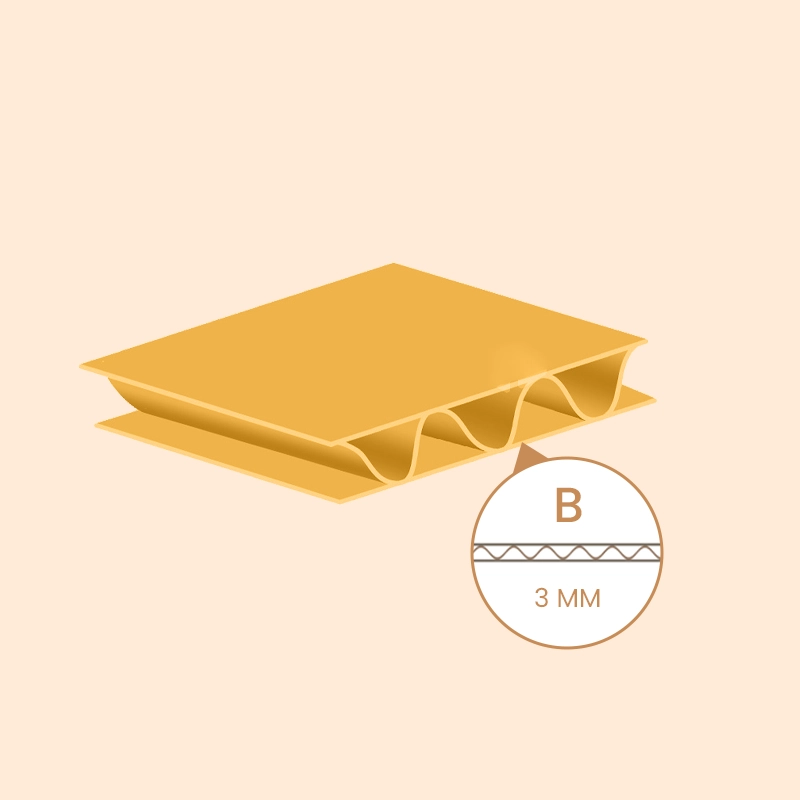
B flute cardboard offers excellent crush resistance and high-quality printing.
C Flute Corrugated Cardboard Material UK
C flute corrugated cardboard is the most widely used flute profile in the packaging industry because it provides an outstanding balance between cushioning, compression strength and printing performance.
Consequently, most shipping cartons, e-commerce packaging and warehouse boxes are manufactured using C flute corrugated board.
Ideal applications
- Shipping boxes
- E-commerce packaging
- Warehouse cartons
- Consumer goods
- General-purpose packaging
- Transit outers
Main advantages
- Balanced strength
- Excellent stacking performance
- Reliable product protection
- Cost-effective manufacturing
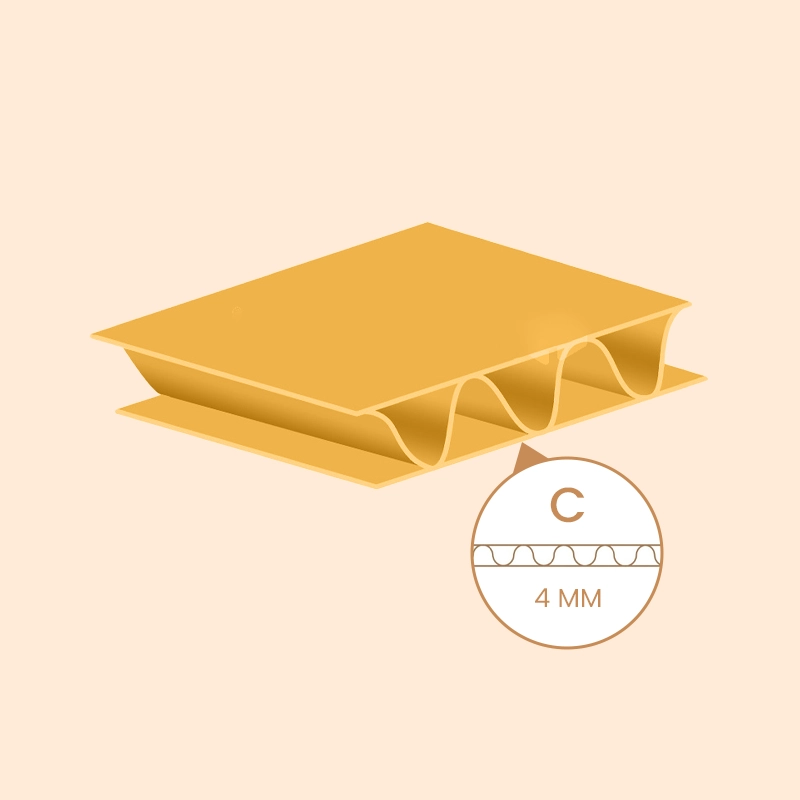
C flute corrugated board is the industry’s most popular choice for shipping and e-commerce packaging.
E Flute Corrugated Cardboard Material UK
E flute cardboard is considerably thinner than traditional shipping flutes. However, its closely spaced flute profile produces a much smoother printing surface.
As a result, E flute has become the preferred material for premium printed retail packaging where appearance is as important as product protection.
Typical applications
- Cosmetic packaging boxes
- Luxury retail packaging
- Electronics packaging
- Pharmaceutical cartons
- Gift boxes
- Premium presentation boxes
Main advantages
- Excellent print quality
- Smooth surface finish
- Premium appearance
- Reduced material usage
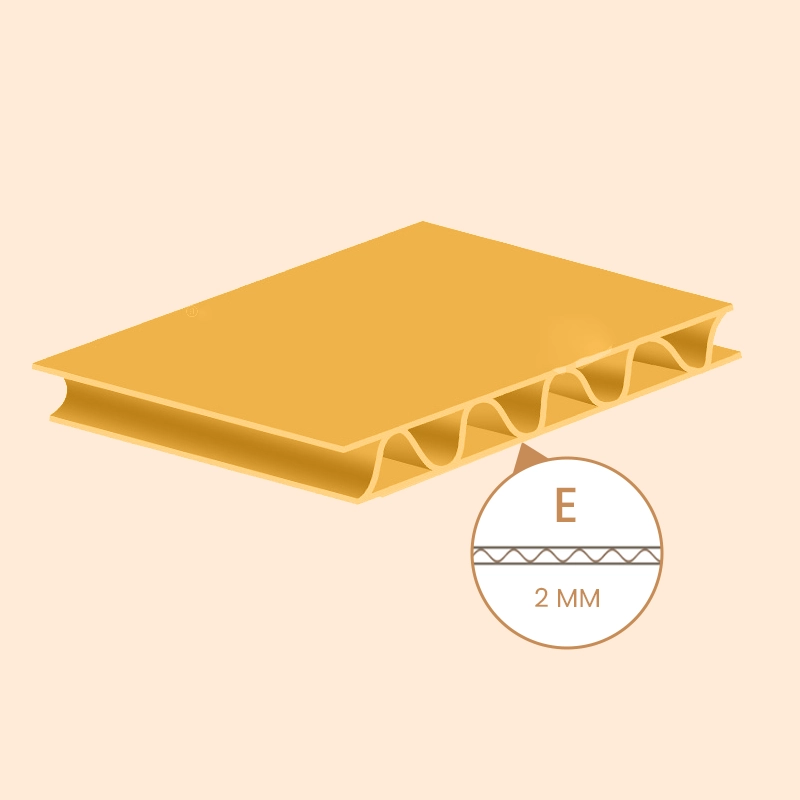
E flute cardboard delivers outstanding print quality for premium retail packaging.
F Flute Corrugated Cardboard Material UK
F flute corrugated cardboard is one of the thinnest commercially available flute profiles. Although it uses less material, it still provides impressive rigidity and excellent structural performance.
However, because of its compact structure, F flute has become increasingly popular for luxury retail packaging where both appearance and sustainability are important.
Typical applications
- Luxury packaging
- Jewellery boxes
- Food packaging
- Small electronic products
- Healthcare packaging
- Premium folding cartons
Main advantages
- Luxury appearance
- Excellent structural rigidity
- High-quality printing surface
- Reduced board thickness
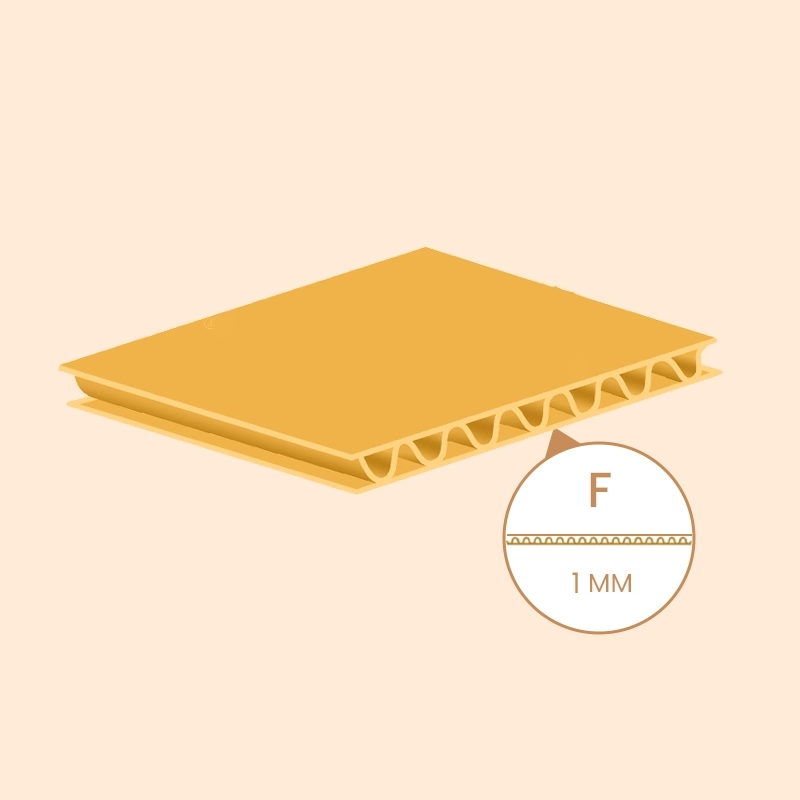
F flute corrugated cardboard combines a premium appearance with efficient material usage.
Micro Flute Corrugated Cardboard Material UK
In recent years, micro flute cardboard has become increasingly popular for premium retail packaging. Micro flutes use extremely fine flute profiles that provide an attractive appearance while maintaining excellent strength.
Consequently, luxury brands frequently choose micro flute packaging instead of traditional folding cartons because it combines the strength of corrugated packaging with the appearance of premium paperboard.
Micro flute boards are commonly used for:
- Luxury cosmetics
- Mobile accessories
- Gift packaging
- Premium confectionery
- Subscription boxes
- Electronics packaging
Corrugated Flute Comparison Table
| Flute Type | Approx. Thickness | Strength | Print Quality | Typical Uses |
|---|---|---|---|---|
| A Flute | 4.8–5.0 mm | ★★★★★ | ★★★☆☆ | Heavy-duty shipping and fragile products |
| B Flute | 2.5–3.2 mm | ★★★★☆ | ★★★★☆ | Retail packaging and mailer boxes |
| C Flute | 3.5–4.0 mm | ★★★★★ | ★★★★☆ | Shipping cartons and e-commerce packaging |
| E Flute | 1.2–1.8 mm | ★★★☆☆ | ★★★★★ | Printed retail packaging |
| F Flute | 0.8–1.2 mm | ★★★☆☆ | ★★★★★ | Luxury packaging and cosmetics |
Choosing the correct corrugated flute depends on product weight, transport conditions, branding requirements and budget. Therefore, consulting an experienced packaging manufacturer helps ensure you select the most suitable flute profile for your products while optimising packaging costs.
Corrugated Cardboard Material UK Grades, Strength & Specifications
Not all corrugated cardboard material UK is manufactured to the same specification. Besides flute profiles, manufacturers also produce different corrugated cardboard grades based on paper quality, compression strength, bursting strength and intended application. Therefore, selecting the correct board grade is just as important as choosing the correct flute type.
Generally, stronger board grades use higher-quality linerboards and fluting mediums. Consequently, they provide better stacking strength, improved puncture resistance and greater durability during transportation.
Kraft Liner Board
Kraft linerboard is manufactured primarily from virgin softwood fibres. Because these fibres are longer and stronger than recycled fibres, kraft liners provide excellent tear resistance and compression strength.
As a result, kraft linerboard is commonly used for:
- Heavy-duty shipping cartons
- Export packaging
- Industrial packaging
- High-performance corrugated boxes
Test Liner Board
Test liner contains a higher percentage of recycled fibres. Although it offers slightly lower strength than virgin kraft linerboard, it provides an economical solution for many retail and e-commerce applications.
Businesses often choose test liner for:
- Retail cartons
- Subscription boxes
- Consumer products
- Short-distance shipping
White Top Linerboard
White top linerboard combines the strength of corrugated packaging with a bright printable surface. Consequently, it is widely used for premium retail packaging where product presentation is particularly important.
Specifically, this material is commonly used for:
- Luxury retail packaging
- Cosmetic packaging boxes
- Electronics packaging
- Printed display cartons
| Board Grade | Strength | Print Quality | Typical Applications |
|---|---|---|---|
| Kraft Liner | ★★★★★ | ★★★★☆ | Industrial, export and heavy-duty packaging |
| Test Liner | ★★★★☆ | ★★★★☆ | Retail packaging and e-commerce cartons |
| White Top Liner | ★★★★☆ | ★★★★★ | Premium printed retail packaging |
Corrugated Cardboard Material UK GSM Guide
Many businesses search for cardboard thicknesses or GSM values when selecting packaging. However, unlike folding carton board, corrugated packaging performance depends on both the paper weight and the flute structure. Therefore, GSM alone should never determine material selection.
GSM (grams per square metre) measures the weight of the paper used to manufacture linerboards and fluting paper. Higher GSM papers generally provide greater durability, although flute profile and board construction also play a major role.
| Paper Weight (GSM) | Typical Application |
|---|---|
| 110–125 GSM | Lightweight fluting paper |
| 125–150 GSM | Standard linerboard |
| 150–175 GSM | Heavy-duty shipping cartons |
| 175–250 GSM | Industrial corrugated packaging |
Rather than requesting a specific GSM, businesses should discuss their product weight, shipping method and stacking requirements with a packaging specialist. This ensures the board grade, flute profile and linerboard combination are properly matched to the application.
Corrugated Cardboard Material UK Grades, Strength & Material Specifications
Choosing the correct corrugated cardboard material UK involves more than selecting a flute profile. Manufacturers also evaluate the liner board, corrugated medium, board grade, compression strength and intended application. Consequently, understanding these technical specifications helps businesses purchase packaging that protects products without unnecessarily increasing material costs.
Moreover, packaging engineers normally balance strength, weight, print quality and shipping performance before recommending a particular corrugated board.
What Are Corrugated Board Grades?
A corrugated board grade describes the combination of liner boards and corrugated medium used to manufacture the finished sheet. Different grades provide different levels of compression strength, burst resistance and stacking performance.
For example, lightweight retail packaging generally uses lighter grades, whereas export cartons require stronger combinations that resist crushing during transportation.
In addition, common factors that determine board grades include:
- Liner board weight
- Fluting paper quality
- Corrugated medium density
- Burst strength
- Edge Crush Test (ECT)
- Box Compression Test (BCT)
- Moisture resistance
Therefore, selecting the correct grade ensures products remain protected throughout storage, handling and delivery.
What Is Corrugated Medium?
Many businesses search for corrugated medium without understanding its role.
The corrugated medium is the specially manufactured paper that forms the fluted centre layer inside corrugated cardboard. During production, manufacturers pass this paper through heated corrugating rollers that create the familiar wave-shaped structure.
Moreover, the corrugated medium provides:
- Shock absorption
- Vertical compression strength
- Stacking performance
- Cushioning during transportation
- Structural rigidity
Without a high-quality corrugated medium, even premium liner boards cannot provide sufficient packaging strength.
What Is Fluting Paper in Corrugated Cardboard Material UK?
One of the highest-impression Search Console queries is fluting paper, making it an important topic for this guide.
Fluting paper is the paper used to manufacture the corrugated medium. During production, the paper passes through corrugating rollers that create the flute profile before it is glued between liner boards.
Different fluting papers provide different characteristics, including:
- Higher compression strength
- Improved cushioning
- Better moisture performance
- Lower overall board weight
- Greater stacking capability
Consequently, choosing the correct fluting paper significantly influences the final performance of corrugated packaging.
Containerboard and Fluting Materials Used in Corrugated Cardboard Material UK
Another common industry term is containerboard.
Containerboard consists of both liner board and fluting paper manufactured specifically for corrugated packaging production. Together, these materials create strong yet lightweight corrugated fibreboard suitable for shipping products worldwide.
Modern containerboard fluting materials are engineered to deliver:
- Consistent flute formation
- Excellent bonding strength
- Reliable print surfaces
- Reduced material consumption
- Improved sustainability
As a result, containerboard remains the foundation of today’s corrugated packaging industry.
Corrugated Fibreboard vs Corrugated Cardboard
Although people often use the terms interchangeably, there is a technical difference.
Corrugated fibreboard is the official industry term used by packaging manufacturers and international standards organisations.
Meanwhile, corrugated cardboard is the more commonly used commercial term recognised by customers and retailers.
Both describe the same multi-layer packaging material consisting of:
- Outer liner board
- Fluting paper
- Inner liner board
Therefore, whether customers search for corrugated fibreboard or corrugated cardboard material UK, they are generally referring to the same packaging product.
Understanding Corrugated Cardboard Material UK Thickness and Grades
Many businesses search for cardboard thicknesses and cardboard grades when comparing packaging materials.
However, thickness alone does not determine strength.
Instead, manufacturers evaluate several characteristics simultaneously:
- Flute profile
- Board grade
- Paper weight (GSM)
- Liner quality
- Compression performance
- Intended application
For example, a double-wall board using premium liner papers may outperform a thicker board manufactured from lower-quality recycled fibres.
Therefore, businesses should always choose packaging based on performance rather than thickness alone.
Corrugated Cardboard Material UK Types for Different Industries
Different industries require different corrugated material types.
For example:
- E-commerce: Single wall C flute mailer boxes.
- Retail Packaging: Premium E flute printed cartons.
- Electronics: Double-wall corrugated boxes for additional protection.
- Industrial Equipment: Heavy-duty BC flute or triple-wall corrugated packaging.
- Food Industry: Food-safe corrugated packaging with moisture-resistant liners.
- Luxury Products: Fine E flute or F flute corrugated packaging with premium printing.
Accordingly, matching the correct corrugated material to the product improves both protection and cost efficiency.
Corrugated Board Strength Tests
Professional packaging manufacturers evaluate corrugated cardboard material UK using internationally recognised performance tests. These tests help determine whether a corrugated board can safely withstand transportation, stacking and warehouse storage.
Edge Crush Test (ECT)
The Edge Crush Test (ECT) measures how much vertical compression a corrugated board can withstand before collapsing. Consequently, ECT has become one of the most important measurements for modern shipping cartons.
Higher ECT ratings generally indicate:
- Better stacking strength
- Improved warehouse performance
- Greater resistance during transportation
- Reduced box failure
Box Compression Test (BCT)
The Box Compression Test (BCT) evaluates the strength of a completed corrugated box rather than the board alone. Manufacturers use this test to determine how much weight stacked cartons can safely support.
BCT is particularly important for:
- Warehouse storage
- Pallet shipments
- Export packaging
- Heavy industrial products
Bursting Strength Test
The bursting strength test measures the pressure required to rupture the board surface. Although ECT has become more widely used for shipping cartons, bursting strength remains valuable when evaluating puncture resistance and overall board quality.
Cobb Test
The Cobb test measures water absorption. Packaging intended for chilled foods, exports or humid environments often requires improved moisture resistance. Consequently, manufacturers use Cobb testing when developing moisture-resistant corrugated packaging.
Did You Know?
Choosing the strongest corrugated board is not always the most cost-effective solution. Instead, selecting the correct combination of flute profile, board grade and linerboard often delivers better protection while reducing packaging costs and shipping weight.
Applications of Corrugated Packaging Material UK
The versatility of corrugated packaging makes it suitable for almost every industry. Because manufacturers can customise board grades, flute profiles and structural designs, corrugated cardboard protects products ranging from lightweight cosmetics to heavy industrial equipment.
E-commerce Packaging
Online retailers rely heavily on custom mailer boxes and corrugated shipping cartons because they provide reliable protection while remaining lightweight and economical.
Retail Packaging
Retail brands increasingly use E flute and F flute corrugated packaging to combine excellent print quality with improved product protection.
Food Packaging
Food packaging boxes frequently use corrugated material for transporting bakery products, fruit, vegetables, beverages and takeaway packaging.
Electronics Packaging
Electronic products require excellent cushioning during transportation. Consequently, manufacturers often select double wall corrugated board together with custom inserts to minimise movement inside the carton.
Industrial Packaging
Heavy engineering products, machinery and automotive components commonly use double wall and triple wall corrugated packaging because of their superior compression strength.
Export Packaging
International shipments frequently experience repeated handling and stacking. Therefore, export packaging often combines high-strength kraft linerboard, reinforced flute profiles and moisture-resistant coatings to improve product protection.
Why Corrugated Cardboard Material UK Is the Industry Standard
One reason corrugated cardboard material UK remains one of the world’s most widely used packaging materials is its versatility. Businesses across almost every industry rely on corrugated packaging because it provides an excellent balance of protection, lightweight construction, branding opportunities and sustainability.
Moreover, corrugated packaging can be manufactured in hundreds of different board grades, flute profiles and structural designs, allowing each industry to select packaging that matches its operational requirements.
Corrugated Cardboard Material UK for E-commerce
Online retailers are among the largest users of corrugated board. Every parcel shipped through courier networks experiences multiple handling stages before reaching customers.
Therefore, packaging must protect products against:
- Compression during stacking
- Drops during handling
- Vehicle vibration
- Warehouse storage
- Long-distance transportation
For this reason, many e-commerce businesses choose C flute corrugated cardboard because it combines cushioning with good compression strength.
Moreover, popular e-commerce products include:
- Mailer boxes
- Subscription boxes
- Shipping cartons
- Fulfilment packaging
- Protective inserts
Retail Corrugated Packaging
Retail packaging has different priorities compared with shipping cartons.
Although strength remains important, businesses also require attractive presentation, premium printing and shelf appeal.
Consequently, many retailers select E flute cardboard or F flute cardboard because both provide smoother printing surfaces while maintaining excellent structural performance.
Furthermore, retail applications include:
- Cosmetic boxes
- Gift packaging
- Electronics packaging
- Apparel boxes
- Promotional packaging
- Point-of-sale displays
Moreover, corrugated packaging supports embossing, foil stamping, Spot UV, die-cut windows and premium finishes that help products stand out on retail shelves.
Food Industry Corrugated Cardboard Material UK
Food manufacturers use corrugated cardboard for transporting and displaying a wide variety of products.
Examples include:
- Bakery cartons
- Fresh produce boxes
- Frozen food packaging
- Beverage trays
- Pizza delivery cartons
- Takeaway packaging
Food-grade corrugated packaging often incorporates moisture-resistant liner boards or protective coatings depending on product requirements.
Furthermore, corrugated packaging is lightweight, recyclable and easy to transport, making it an economical solution for food businesses.
Electronics Packaging
Electronic devices require additional protection because many products contain fragile components.
Therefore, manufacturers frequently specify:
- Double-wall corrugated board
- Protective corrugated inserts
- Custom partitions
- Die-cut cushioning components
- High compression board grades
These packaging solutions reduce movement inside the carton while protecting products from impacts during transportation.
Industrial Corrugated Cardboard Material UK
Heavy machinery, automotive parts and engineering products require stronger packaging than standard retail cartons.
Accordingly, industrial manufacturers often use:
- Double wall corrugated board
- Triple wall corrugated board
- BC flute cardboard
- Heavy-duty containerboard
- Reinforced shipping cartons
These stronger corrugated material types support high stacking loads while reducing product damage during export shipping.
Pharmaceutical and Healthcare Packaging
Healthcare products require packaging that is both protective and hygienic.
Corrugated packaging is commonly used for:
- Medical devices
- Healthcare supplies
- Laboratory equipment
- Prescription deliveries
- Hospital logistics
Depending on the application, manufacturers may combine corrugated fibreboard with protective inserts that minimise product movement during transport.
Why Corrugated Cardboard Material UK Is the Industry Standard
Despite the availability of plastic, rigid and composite packaging materials, corrugated board continues to dominate the packaging industry.
Several factors explain its popularity.
Excellent Protection
The combination of liner boards and fluting paper creates a lightweight structure capable of absorbing shocks, resisting compression and protecting products throughout the supply chain.
Outstanding Cost Efficiency
Corrugated packaging provides excellent performance without the high manufacturing costs associated with many premium packaging materials.
Consequently, businesses achieve lower packaging costs while maintaining product protection.
Highly Customisable options for Corrugated Cardboard Material UK
In addition, manufacturers can produce corrugated packaging in almost any:
- Size
- Board grade
- Flute profile
- Box style
- Printing design
- Structural configuration
Therefore, businesses can create packaging that perfectly matches their branding and logistics requirements.
Excellent Print Quality
Modern printing technologies allow corrugated packaging to display high-quality graphics, logos, instructions, barcodes and marketing messages.
Moreover, E flute cardboard and F flute cardboard provide particularly smooth surfaces for premium retail packaging.
Supports Sustainable Packaging Goals
Many organisations are actively replacing plastic packaging with recyclable corrugated alternatives.
Since corrugated cardboard contains renewable fibres and is widely recycled, it helps businesses improve environmental performance while meeting customer expectations.
Consequently, corrugated packaging has become one of the most sustainable packaging materials available today.
Suitable for Businesses of Every Size
Whether you operate a small online shop or a multinational manufacturing company, corrugated cardboard material UK offers scalable packaging solutions.
Small businesses benefit from affordable short production runs, while larger organisations can reduce unit costs through wholesale manufacturing.
As a result, corrugated packaging remains the preferred choice for start-ups, retailers, wholesalers, manufacturers and international exporters alike.
Why Choose Sky Print and Enterprise for Corrugated Cardboard Material UK?
Selecting the right packaging partner is just as important as selecting the right corrugated cardboard material UK. At Sky Print and Enterprise, we manufacture custom corrugated packaging that combines structural strength, premium printing and reliable performance. Whether you require retail packaging, corrugated transit outers, e-commerce mailers or industrial shipping cartons, we help you choose the correct flute board, corrugated medium and board grade for your application.
Moreover, unlike standard box suppliers, we provide technical guidance before production. Therefore, you receive packaging that protects your products while improving presentation and reducing shipping costs.
Custom Corrugated Packaging Material UK Solutions
- Custom corrugated boxes manufactured to your exact dimensions
- Single wall, double wall and triple wall corrugated board
- A Flute, B Flute, C Flute, E Flute, F Flute and micro flute cardboard options
- Retail packaging and e-commerce packaging
- Corrugated transit outers and export cartons
- Printed corrugated packaging with premium finishes
- Eco-friendly and recyclable packaging materials
- Short production runs and wholesale manufacturing
In addition, explore our custom corrugated boxes UK, printed mailer boxes and complete packaging materials UK guide.
Need Help Choosing the Right Corrugated Board?
Our packaging specialists will recommend the ideal corrugated cardboard material, flute type, board grade and box construction based on your product, shipping method and branding requirements.
Frequently Asked Questions About Corrugated Cardboard Material UK
What is corrugated cardboard material?
Corrugated cardboard material consists of one or more fluted paper layers bonded between liner boards. This engineered structure provides excellent strength, cushioning and stacking performance while remaining lightweight.
What is fluting paper?
Fluting paper, also called corrugated medium, forms the wavy centre layer inside corrugated board. It absorbs impact and creates the compression strength that protects products during shipping and storage.
What is the difference between corrugated board and cardboard?
Cardboard generally refers to solid paperboard with a single structure. Corrugated board contains fluted layers between liners, making it considerably stronger for shipping, transit packaging and heavy products.
Which corrugated flute is best?
The best flute depends on the application. C flute suits general shipping, B flute performs well for retail packaging, E flute provides superior print quality, while A flute offers excellent cushioning for fragile products.
What are corrugated transit outers?
Corrugated transit outers are strong shipping cartons designed to protect products during transportation, warehousing and distribution. They are widely used by manufacturers, wholesalers and e-commerce businesses.
Can corrugated packaging be printed?
Yes. Corrugated packaging supports high-quality flexographic, digital and litho-laminated printing. Premium finishes including Spot UV, embossing, foil stamping and die-cut windows can also be added depending on the board type.
Is corrugated cardboard environmentally friendly?
Yes. Corrugated cardboard is manufactured primarily from paper fibres and is one of the world’s most recycled packaging materials. It supports sustainable packaging initiatives and circular economy practices.
What industries use corrugated cardboard material UK?
Corrugated packaging is widely used across e-commerce, retail, food, cosmetics, pharmaceuticals, electronics, automotive, manufacturing and logistics because it offers excellent protection and cost efficiency.
What is micro flute cardboard?
Micro flute cardboard uses very fine flute profiles such as F flute and N flute. These boards provide a smooth printing surface while maintaining strength, making them ideal for premium retail packaging.
How do I choose the right corrugated cardboard material UK?
You should consider product weight, shipping conditions, stacking requirements, print quality, sustainability goals, budget and branding objectives. Working with an experienced packaging manufacturer helps ensure the correct board grade and flute combination is selected.
Conclusion: Selecting the Right Corrugated Cardboard Material UK
Choosing the correct corrugated cardboard material UK improves product protection, lowers shipping damage and strengthens your brand image. Although corrugated board appears simple, selecting the correct flute board, corrugated medium, board grade and wall construction significantly affects packaging performance. Therefore, understanding corrugated board uses, flute types and cardboard grades helps businesses make informed packaging decisions.
Whether you need corrugated transit outers, fluted cardboard for retail packaging, printed e-commerce boxes or heavy-duty shipping cartons, selecting the right corrugated materials ensures long-term value.
At Sky Print and Enterprise, we manufacture custom corrugated packaging solutions tailored to your products, logistics requirements and branding goals. Contact our team today for expert advice and a free quotation.