
Printing Methods Guide: Everything You Need to Know
Welcome to this comprehensive Printing Methods Guide, your complete resource for understanding modern commercial printing techniques used across the packaging, publishing, retail and manufacturing industries. Whether you are producing luxury packaging, food cartons, labels, brochures, books or promotional materials, selecting the correct printing process has a direct impact on print quality, production speed, durability and overall project cost. Therefore, understanding how each printing method works is essential before placing any commercial print order.
Although many businesses compare quotations based purely on price, experienced print buyers evaluate far more than the cost per unit. They also consider colour consistency, print resolution, production volume, finishing options, turnaround time and the type of material being printed. Consequently, choosing the most suitable printing method often improves both quality and long-term value.
Throughout this Printing Methods Guide, you will discover how offset printing, digital printing, flexographic printing, gravure printing, screen printing, UV printing and other commercial printing techniques differ from one another. In addition, you will learn where each method performs best, what limitations to consider and how professional manufacturers select the right process for different products.
Furthermore, this guide explains how printing methods work alongside packaging materials, structural design and finishing techniques. As a result, you will gain the knowledge required to compare quotations confidently, communicate effectively with suppliers and choose the most appropriate printing solution for your business.
📖 Printing Methods Guide – Table of Contents
Jump directly to any chapter of this complete Printing Methods Guide and explore commercial printing technologies, packaging materials, finishing techniques and expert recommendations.
Why This Printing Methods Guide Matters
Printing technology has developed significantly over the past few decades. While traditional presses continue to produce exceptional quality for high-volume jobs, modern digital systems now provide cost-effective solutions for shorter print runs and personalised products. Consequently, businesses have more choices than ever before. However, having more options also makes selecting the correct printing process more challenging.
For example, a luxury perfume box requires a different production approach from a corrugated shipping carton. Likewise, food packaging often relies on specialised inks and efficient high-volume printing, whereas premium marketing materials prioritise colour accuracy and decorative finishes. Therefore, every successful print project begins by matching the product to the appropriate printing method.
Moreover, understanding commercial printing helps businesses avoid common mistakes. Choosing the wrong process may increase production costs, reduce print quality or limit finishing options. By contrast, selecting the correct printing method improves manufacturing efficiency while maintaining consistent branding across every printed item.
This Printing Methods Guide has been created for business owners, marketing professionals, packaging buyers, product manufacturers, designers and anyone responsible for purchasing commercial print. Whether you order hundreds of printed products or hundreds of thousands, the principles explained throughout this guide remain equally valuable.

printed Folding cardboard gift box that combines premium presentation with space-saving storage.
Printing Methods Guide: What Are Printing Methods?
Printing methods are the different manufacturing processes used to transfer text, graphics, photographs and branding onto paper, cardboard, plastic, fabric, corrugated board and many other materials. Every printing method follows the same objective—reproducing artwork accurately—but each achieves that objective using different equipment, technologies and production techniques.
Some printing methods transfer ink directly from printing plates, while others apply ink digitally without requiring physical plates. In addition, certain techniques specialise in flexible packaging, whereas others produce exceptional photographic detail or support speciality finishes such as metallic inks, varnishes and textured coatings.
Consequently, commercial printers choose different technologies according to the project requirements. Factors such as production quantity, substrate, colour accuracy, turnaround time and budget all influence the final decision.
The most common commercial printing methods include:
- Offset Lithographic Printing
- Digital Printing
- Flexographic Printing
- Gravure Printing
- Screen Printing
- UV Printing
- Pad Printing
- Large Format Printing
Each of these methods serves different industries and applications. Therefore, understanding their strengths and limitations enables businesses to make more informed purchasing decisions.
How Printing Methods Support Packaging Manufacturing
Modern packaging combines structural engineering with advanced commercial printing. While packaging materials protect products, printing communicates brand identity, product information and regulatory requirements. Consequently, both elements must work together throughout the manufacturing process.
For example, premium
Perfume Boxes
often require exceptional colour accuracy, fine typography and luxury finishes such as foil stamping or Spot UV. Meanwhile,
Shipping Boxes
prioritise durability, readability and production efficiency over decorative effects.
Similarly,
Custom Serum Boxes,
Printed Box Sleeves
and
Printed Foldable Boxes
depend on high-quality commercial printing because customers often judge the product before opening the packaging.
Therefore, manufacturers evaluate the complete production process before recommending a printing method. Besides considering the artwork itself, they also review the packaging material, board thickness, finishing requirements, production volume and intended retail environment. As a result, the finished packaging achieves both visual appeal and consistent manufacturing quality.
Expert Insight
The best commercial printing projects begin long before ink reaches the substrate. Successful manufacturers first evaluate the product, packaging material, print quantity, finishing requirements and customer expectations. Only then do they recommend the most appropriate printing method. Following this approach consistently produces better quality, improved production efficiency and greater long-term value.
Printing Methods Guide: Understanding Offset Printing
Among all commercial printing technologies, offset lithographic printing remains the industry benchmark for producing exceptionally high-quality printed products. Although digital printing has expanded rapidly over recent years, offset printing continues to dominate medium and high-volume commercial production because it delivers outstanding colour consistency, excellent image sharpness and highly competitive unit costs for larger print runs. Therefore, understanding offset printing is essential in any comprehensive Printing Methods Guide.
Offset printing works by transferring ink from a metal printing plate onto a rubber blanket before the image is finally transferred onto the printing material. Because the printing plate never touches the paper directly, the process produces extremely clean images while reducing wear on the plates themselves. Consequently, businesses can achieve consistent results even when printing tens of thousands of sheets.
Furthermore, offset printing supports a wide variety of premium papers and packaging boards. Whether the project involves luxury folding cartons, brochures, catalogues or branded packaging, offset presses consistently reproduce fine detail, smooth gradients and accurate corporate colours. As a result, many premium brands continue to choose offset printing for products where presentation directly influences customer perception.
Although the initial setup requires printing plates and press preparation, the production cost per unit decreases significantly as quantities increase. Consequently, offset printing becomes one of the most economical solutions for large commercial orders.
Printing Methods Guide: How Offset Printing Works
The offset printing process begins with professionally prepared artwork. After the artwork has been approved, separate printing plates are produced for each process colour—Cyan, Magenta, Yellow and Black (CMYK). These plates are then mounted onto the printing press.
As the press operates, dampening rollers apply water to the plate while ink rollers apply ink. Because oil-based ink and water naturally repel one another, ink adheres only to the image areas. The image transfers from the plate to a rubber blanket before finally being printed onto the substrate. Consequently, the finished print displays remarkable precision and excellent colour reproduction.
Modern offset presses also include automated registration systems, colour monitoring technology and advanced drying systems. Therefore, commercial printers can maintain consistent quality throughout long production runs while minimising waste and production delays.
Additionally, offset presses support a broad range of paper stocks, coated boards and packaging materials. This flexibility allows manufacturers to produce everything from premium catalogues to retail packaging using the same core printing technology.
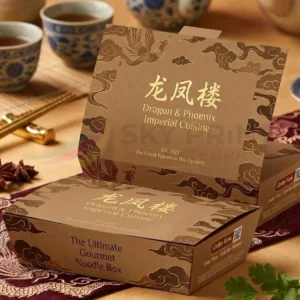
printed bespoke chinese takeaway boxes
Printing Methods Guide: Advantages of Offset Printing
Offset printing remains popular because it combines exceptional quality with excellent production efficiency. While other technologies may offer advantages for specific applications, offset printing provides an outstanding balance of precision, consistency and commercial value.
- Excellent colour consistency across large production runs.
- Outstanding image sharpness and photographic detail.
- Highly accurate reproduction of corporate brand colours.
- Cost-effective for medium and high-volume printing.
- Compatible with a wide range of papers and packaging boards.
- Supports premium finishing such as foil stamping, embossing and Spot UV.
- Produces smooth gradients and fine typography.
- Delivers reliable quality with minimal variation between copies.
Consequently, many luxury brands continue to rely on offset printing whenever premium presentation forms part of the customer experience.
Printing Methods Guide: Common Applications of Offset Printing
Offset printing serves numerous industries because it combines flexibility with exceptional print quality. As a result, commercial printers regularly recommend this method for packaging, publishing and premium marketing materials.
Typical applications include:
- Luxury folding cartons.
- Product packaging.
- Corporate brochures.
- Books and magazines.
- Catalogues.
- Presentation folders.
- Marketing literature.
- Retail packaging.
Within the packaging industry, offset printing is particularly suitable for products such as
Perfume Boxes,
Serum Boxes,
Bracelet Boxes,
Custom Cufflink Boxes
and
Scarf Gift Boxes,
where outstanding presentation directly supports premium branding.
Likewise, businesses producing
Printed Foldable Boxes
or
Custom Box Sleeves
often choose offset printing because it delivers crisp graphics, vibrant colours and excellent finishing compatibility.
Printing Methods Guide: When Offset Printing May Not Be the Best Choice
Although offset printing offers numerous advantages, it is not always the most suitable solution. Every printing project has different commercial requirements, so manufacturers evaluate several factors before recommending a production method.
For example, offset printing requires metal plates, press setup and colour calibration before production begins. Consequently, very small print runs may become less economical than digital printing. Likewise, personalised printing or variable data applications generally favour digital technology because each printed sheet can contain different information without interrupting production.
Additionally, projects requiring extremely fast turnaround times may benefit from digital printing because plate production is unnecessary. Nevertheless, once production quantities increase, offset printing usually becomes the more cost-effective option while maintaining superior colour consistency.
Therefore, experienced commercial printers compare print quantity, delivery schedule, substrate, finishing requirements and budget before recommending the most appropriate production process.
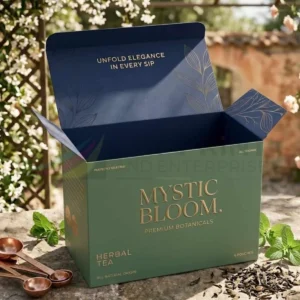
printed cardboard box Wholesale
Professional Recommendation
Offset printing remains the preferred solution for businesses requiring premium print quality, exceptional colour consistency and competitive pricing on medium to high-volume orders. However, the best results are achieved when the printing method is selected alongside the packaging material, structural design and finishing requirements. Consequently, experienced manufacturers evaluate the complete project before recommending the most suitable production process rather than focusing solely on print volume or cost.
Printing Methods Guide: Understanding Digital Printing
Digital printing has transformed the commercial printing industry by making short production runs faster, more flexible and more affordable. Unlike traditional offset printing, digital presses do not require printing plates. Instead, artwork is transferred directly from a digital file to the printing press. Consequently, setup times are dramatically reduced, allowing businesses to produce high-quality printed materials with minimal preparation.
As explained throughout this Printing Methods Guide, every printing technology serves a different purpose. While offset printing remains the preferred choice for large production runs, digital printing excels when speed, personalisation and lower quantities are the priority. Therefore, many businesses now combine both technologies depending on the requirements of each project.
Furthermore, digital printing allows artwork to be changed instantly without producing new plates. As a result, companies can print multiple versions of the same packaging, personalise customer names, update promotional offers or modify regulatory information without increasing setup costs. This flexibility has made digital printing one of the fastest-growing commercial printing methods worldwide.
Today, digital presses are capable of producing outstanding colour quality on paper, cardboard, labels, folding cartons and many other substrates. Consequently, digital printing has become an essential solution for modern packaging manufacturers and commercial printers.
Printing Methods Guide: How Digital Printing Works
Digital printing begins with an electronic artwork file prepared using professional design software. Instead of producing metal printing plates, the file is sent directly to the digital press. The printer then reproduces the artwork using either toner technology or high-resolution inkjet systems.
Because the image is generated digitally, every sheet can contain different information. Consequently, digital printing supports variable data printing, personalised packaging, sequential numbering, QR codes, barcodes and customised marketing campaigns without interrupting production.
Moreover, digital presses require significantly less setup than traditional printing equipment. Operators can adjust colours, reposition artwork and begin production within a short period. Therefore, businesses requiring urgent delivery frequently choose digital printing because it reduces overall production time.
Although digital printing is commonly associated with smaller print runs, technological developments continue to improve productivity, colour accuracy and substrate compatibility. As a result, modern digital presses now compete successfully in many commercial packaging applications.
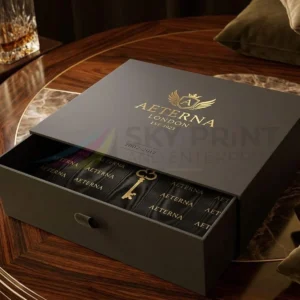
Rigid board creates premium retail packaging for luxury brands and high-value products.
Printing Methods Guide: Advantages of Digital Printing
Digital printing offers numerous commercial benefits, particularly for businesses requiring flexibility, rapid turnaround and lower production quantities. Consequently, many packaging manufacturers recommend digital printing during product development, market testing and promotional campaigns.
- No printing plates are required.
- Fast production with minimal setup time.
- Excellent for short and medium print runs.
- Supports personalised and variable data printing.
- Simple artwork revisions before production.
- Reduced material waste during setup.
- Quick proofing before full production.
- High-quality colour reproduction.
- Ideal for prototypes and product launches.
- Efficient for seasonal or promotional packaging.
Additionally, digital printing allows brands to produce multiple packaging versions within a single production run. Therefore, marketing teams can create regional promotions, limited editions or personalised products without investing in new printing plates.
Printing Methods Guide: Best Packaging Applications for Digital Printing
Digital printing performs exceptionally well across many packaging sectors. While high-volume retail packaging often continues to use offset or flexographic printing, digital technology provides outstanding value for smaller production quantities and premium customised products.
Examples include:
- Printed Foldable Boxes for short-run retail packaging.
- Custom Printed Box Sleeves for promotional campaigns.
- Dog Toy Packaging for product launches.
- Golf Subscription Boxes featuring seasonal branding.
- Honey Packaging with regional product variations.
Likewise, food businesses introducing new products frequently use digital printing because packaging artwork can be updated quickly as recipes, nutritional information or marketing messages evolve. Consequently, companies avoid unnecessary waste while maintaining professional presentation.
Printing Methods Guide: Inkjet Printing and Laser Printing
Digital printing includes several technologies, with inkjet printing and laser printing being the most widely recognised. Although both methods transfer digital artwork directly onto the substrate, they operate using different processes and are suited to different commercial applications.
Inkjet Printing
Inkjet printers create images by spraying microscopic droplets of ink onto the printing surface. Consequently, they produce smooth gradients, vibrant colours and excellent photographic detail. Modern industrial inkjet systems are widely used for packaging, labels, direct mail, large-format graphics and personalised printing projects.
Furthermore, inkjet technology supports a wide variety of substrates, including coated paper, cardboard and speciality packaging materials. Therefore, many commercial packaging manufacturers choose industrial inkjet presses for high-quality short-run production.
Laser Printing
Laser printing uses electrostatic technology and toner instead of liquid ink. During printing, a laser creates an electrostatic image on a rotating drum before toner is transferred and permanently fused onto the substrate using heat.
Because laser printing offers excellent speed and sharp text reproduction, it is commonly used for office documents, manuals, technical literature and certain commercial print applications. However, industrial packaging production generally relies more heavily on professional digital presses than standard laser printers.
Printing Methods Guide: Offset Printing vs Digital Printing
| Feature | Offset Printing | Digital Printing |
|---|---|---|
| Setup | Requires printing plates | No plates required |
| Best Quantity | Medium to high volume | Short to medium runs |
| Personalisation | Limited | Excellent |
| Turnaround | Longer setup | Very fast |
| Unit Cost | Lower for large runs | Better for smaller quantities |
| Colour Consistency | Excellent | Very good |
Expert Insight
Digital printing is the preferred solution when flexibility, speed and personalisation are the primary objectives. Conversely, offset printing remains the better choice for larger production volumes where long-run consistency and lower unit costs are essential. Experienced commercial printers evaluate artwork complexity, order quantity, packaging material and finishing requirements before recommending the most suitable technology for each project.
Printing Methods Guide: Understanding Flexographic Printing
Flexographic printing, commonly known as flexo printing, is one of the world’s most widely used commercial printing methods for packaging production. Although many consumers are unfamiliar with the name, they encounter flexographic printing every day on food cartons, corrugated boxes, labels, paper bags, flexible packaging and shipping cartons. Consequently, no comprehensive Printing Methods Guide would be complete without explaining how this versatile printing process works.
Unlike offset printing, flexographic printing uses flexible relief printing plates mounted around rotating cylinders. During production, fast-drying inks are transferred from an anilox roller onto the printing plate before being applied directly to the substrate. Therefore, flexographic presses operate at exceptionally high speeds while maintaining consistent print quality across very large production runs.
Furthermore, flexographic printing works on an extensive range of materials. Besides paper and cardboard, it also prints successfully on kraft paper, corrugated board, films, plastics, foils and numerous flexible packaging substrates. As a result, manufacturers across the food, retail, pharmaceutical and e-commerce industries rely heavily on flexographic technology.
Because production speeds are extremely high and unit costs decrease significantly as quantities increase, flexographic printing remains one of the most economical solutions for large-scale packaging manufacturing.
Printing Methods Guide: How Flexographic Printing Works
The flexographic printing process begins by producing flexible polymer printing plates. Each colour requires its own plate, similar to offset printing. However, instead of using flat plates, flexographic printing mounts these plates onto rotating cylinders inside the printing press.
Ink is supplied through an anilox roller, which contains thousands of microscopic engraved cells. These cells deliver a precise quantity of ink to the printing plate before the image transfers directly onto the substrate. Consequently, colour application remains remarkably consistent throughout long production runs.
Moreover, flexographic inks dry extremely quickly. Therefore, presses can print continuously at very high speeds without causing smudging or production delays. This rapid drying capability makes flexographic printing particularly suitable for modern packaging manufacturing where productivity and efficiency are essential.
Additionally, modern flexographic presses often incorporate automated colour control, registration systems and inline finishing equipment. As a result, manufacturers can print, varnish, laminate, die-cut and rewind packaging materials within a single production process.
Printing Methods Guide: Advantages of Flexographic Printing
Flexographic printing has become the preferred production method for many packaging manufacturers because it combines outstanding productivity with exceptional substrate versatility.
- Extremely fast production speeds.
- Excellent for high-volume manufacturing.
- Suitable for paper, board, kraft and corrugated materials.
- Compatible with flexible packaging films.
- Efficient ink drying.
- Excellent print consistency.
- Supports water-based and environmentally friendly inks.
- Low production cost for large orders.
- Inline finishing capabilities.
- Reliable long-run performance.
Consequently, businesses producing thousands of packaging units each day frequently select flexographic printing because it provides an excellent balance between production speed, quality and operating efficiency.
Printing Methods Guide: Best Applications for Flexographic Printing
Flexographic printing is widely used throughout the packaging industry because it performs exceptionally well on both paper-based and flexible materials. Therefore, manufacturers often recommend flexographic printing for products requiring large production quantities.
Typical applications include:
- Custom Pizza Boxes
- Burger Boxes
- Fish & Chip Boxes
- Shipping Boxes
- Honey Packaging
- Paper shopping bags.
- Corrugated transit packaging.
- Flexible food packaging.
- Labels and adhesive packaging.
Similarly, businesses producing corrugated e-commerce packaging frequently choose flexographic printing because it combines durability, production efficiency and cost-effective large-volume manufacturing.
Printing Methods Guide: Understanding Gravure Printing
Gravure printing, also known as rotogravure printing, is one of the highest-quality commercial printing processes available today. Unlike offset and flexographic printing, gravure uses engraved metal cylinders that carry microscopic cells filled with ink. Consequently, the process produces exceptionally fine image detail, smooth gradients and remarkable colour consistency.
Although gravure printing requires substantial initial investment, it becomes highly economical for extremely large production volumes. Therefore, international manufacturers frequently use gravure printing for magazines, decorative laminates, premium flexible packaging and luxury consumer products.
Because engraved cylinders can produce millions of consistent impressions, gravure printing remains one of the preferred technologies for continuous industrial production where quality standards are exceptionally high.
Printing Methods Guide: Advantages and Limitations of Gravure Printing
Advantages
- Exceptional photographic quality.
- Outstanding colour consistency.
- Excellent for extremely long print runs.
- Superior durability of engraved cylinders.
- Smooth ink coverage and fine gradients.
- Excellent for premium flexible packaging.
Limitations
- Very high cylinder production costs.
- Less suitable for short production runs.
- Longer preparation before manufacturing.
- Artwork changes require new engraved cylinders.
Therefore, gravure printing is normally selected only when production quantities justify the initial tooling investment.
Printing Methods Guide: Flexographic Printing vs Gravure Printing
| Feature | Flexographic | Gravure |
|---|---|---|
| Production Speed | Very High | Very High |
| Setup Cost | Medium | High |
| Best Volume | High | Extremely High |
| Image Quality | Excellent | Outstanding |
| Packaging | Excellent | Excellent |
| Short Runs | Possible | Not economical |
Expert Recommendation
Within this Printing Methods Guide, flexographic and gravure printing represent two of the most important industrial printing technologies for large-scale packaging production. Flexographic printing provides excellent versatility across paper, kraft and corrugated packaging, while gravure printing delivers unmatched image quality for exceptionally high-volume projects. Consequently, manufacturers evaluate print quantity, substrate, artwork complexity and production costs before recommending either process.
Printing Methods Guide: Understanding Screen Printing
Screen printing remains one of the most versatile printing technologies used in commercial manufacturing today. Although it has existed for centuries, continual improvements in inks, mesh materials and automated presses have enabled screen printing to remain highly relevant across numerous industries. Consequently, businesses continue to rely on this process whenever durability, vibrant colour coverage and speciality finishes are more important than production speed.
Within this Printing Methods Guide, screen printing deserves particular attention because it differs significantly from offset, digital and flexographic printing. Rather than transferring ink through printing plates or digital heads, screen printing forces ink through a finely woven mesh stencil onto the printing surface. Therefore, considerably more ink can be deposited, producing dense colours, excellent opacity and highly durable printed graphics.
Furthermore, screen printing performs exceptionally well on materials that are difficult to print using conventional methods. Glass, acrylic, wood, metal, textiles, rigid plastics and speciality packaging materials can all be printed successfully. As a result, manufacturers frequently select screen printing for promotional products, luxury packaging, industrial components and branded merchandise.
Although screen printing generally operates more slowly than other commercial printing processes, the exceptional durability and premium finish often justify its use for specialist applications.
Printing Methods Guide: How Screen Printing Works
The process begins by creating a stencil on a tightly stretched mesh screen. Areas that should not receive ink are blocked, while the artwork remains open. Ink is then placed onto the screen and pulled across the surface using a rubber squeegee. Consequently, ink passes only through the open sections of the mesh, accurately reproducing the design underneath.
Each colour requires its own individual screen. Therefore, complex artwork containing multiple colours involves several printing stages. However, once setup has been completed, automated screen printing presses can produce highly consistent results with exceptional durability.
Moreover, because thicker ink layers are applied, printed graphics often appear richer and more vibrant than those produced by many other printing methods. This characteristic makes screen printing particularly suitable for premium branding and speciality decorative effects.
Printing Methods Guide: Understanding UV Printing
UV printing is one of the fastest-growing technologies within modern commercial printing. Unlike conventional inks that dry through absorption or evaporation, UV printing uses ultraviolet light to cure specially formulated inks immediately after they are applied. Consequently, the printed image hardens almost instantly, creating exceptionally sharp graphics with outstanding durability.
Furthermore, UV printing produces vibrant colours while resisting scratches, moisture and fading. Therefore, it has become increasingly popular for premium packaging, retail displays, promotional products and industrial applications.
One significant advantage of UV printing is its ability to print directly onto numerous substrates without requiring special coatings. Glass, acrylic, wood, PVC, aluminium, rigid boards and packaging materials can all be printed successfully. As a result, businesses gain greater flexibility when producing premium branded products.
Additionally, UV printing supports speciality effects such as raised varnishes, textured finishes and gloss highlights. Consequently, many luxury packaging manufacturers combine UV printing with embossing, foil stamping and soft-touch lamination to create distinctive retail packaging.
Printing Methods Guide: Best Applications for UV Printing
Because UV printing delivers exceptional image quality and excellent durability, it is widely used across premium retail sectors where presentation directly influences purchasing decisions.
Common packaging applications include:
- Perfume Boxes featuring luxury finishes.
- Custom Serum Boxes with premium branding.
- Essential Oil Storage Boxes.
- Bracelet Boxes.
- Custom Cufflink Boxes.
Likewise, cosmetic, jewellery and premium gift brands frequently choose UV printing because glossy highlights and vibrant colours significantly improve shelf appeal. Therefore, UV technology is often recommended whenever visual presentation is a key selling factor.
Printing Methods Guide: Understanding Pad Printing
Pad printing is a specialised indirect printing process designed for products that cannot be printed using flat printing equipment. Instead of transferring ink directly from a plate to the product, a soft silicone pad lifts the image from an engraved plate before transferring it onto the final surface. Consequently, pad printing can reproduce detailed artwork on curved, irregular and textured objects with remarkable precision.
Although pad printing is less common in commercial paper printing, it remains extremely important within manufacturing industries. Medical devices, electronics, cosmetic containers, promotional merchandise and industrial components frequently depend on pad printing because conventional presses cannot print effectively on complex shapes.
Furthermore, the silicone pad easily adapts to uneven surfaces. Therefore, manufacturers can print logos, instructions, serial numbers and branding onto products that would otherwise be difficult to decorate.
Because pad printing delivers exceptional accuracy on small objects, it is widely used for high-value consumer products where branding and traceability are essential.

personalised Ice Cream Cups
Printing Methods Guide: Screen Printing vs UV Printing vs Pad Printing
| Feature | Screen | UV | Pad |
|---|---|---|---|
| Best Surface | Flat | Flat & Rigid | Curved Objects |
| Colour Strength | Excellent | Excellent | Very Good |
| Durability | Excellent | Excellent | Excellent |
| Complex Shapes | Limited | Limited | Excellent |
| Luxury Packaging | Very Good | Outstanding | Limited |
Expert Recommendation
As this Printing Methods Guide demonstrates, screen printing, UV printing and pad printing each fulfil specialist manufacturing requirements. Screen printing excels where bold colour and durability are essential, UV printing delivers premium packaging with outstanding visual impact, while pad printing solves the challenge of printing on curved or irregular products. Consequently, selecting the correct method depends on the product shape, substrate, branding objectives and production volume rather than simply choosing the newest technology.
Printing Methods Guide: Understanding Large Format Printing
While commercial printing often focuses on packaging, labels and publications, businesses also require printed materials that are much larger than standard paper sizes. Consequently, large format printing, sometimes referred to as wide format printing, has become an essential part of modern marketing and retail branding. Throughout this Printing Methods Guide, it is important to understand that large format printing is designed to produce oversized graphics while maintaining exceptional image quality and colour consistency.
Unlike conventional printing presses that work with standard sheet sizes, large format printers can produce graphics several metres wide. Therefore, they are widely used for exhibition displays, shop signage, banners, window graphics, wall murals, point-of-sale displays and promotional advertising. Furthermore, advances in UV inks, eco-solvent inks and latex technology have significantly improved durability, allowing printed graphics to perform well in both indoor and outdoor environments.
Large format printing is no longer limited to advertising agencies. Today, retailers, manufacturers, restaurants, property developers, event organisers and e-commerce businesses all rely on oversized printed graphics to strengthen their branding and attract customers. As a result, large format printing has become one of the fastest-growing sectors within commercial printing.
Although large format printing serves different purposes from packaging production, both disciplines work together to create a consistent brand experience. Therefore, many companies order retail packaging, promotional displays and exhibition graphics from the same commercial printing partner.
Printing Methods Guide: How Wide Format Printing Works
Wide format printers operate differently from traditional offset presses. Instead of printing onto individual sheets, they typically print from continuous rolls of media. Depending on the printer, ink is applied using inkjet technology, UV curing systems or latex printing technology. Consequently, businesses can produce graphics of almost any length while maintaining excellent resolution.
Before production begins, artwork is prepared at full size or at an appropriate scale using professional graphic design software. The file is then processed by specialised RIP (Raster Image Processor) software, which converts the artwork into instructions for the printer. Therefore, colour accuracy, image sharpness and print consistency remain high throughout production.
Moreover, modern wide format printers support numerous media types, including self-adhesive vinyl, PVC banners, canvas, fabric, paper, polypropylene, foam board and rigid display boards. As a result, businesses can select materials according to their intended application and budget.
Following printing, graphics may be laminated, mounted, trimmed or contour-cut before installation. Consequently, the finished products provide a professional appearance while offering improved durability and weather resistance where required.
Printing Methods Guide: Best Applications for Large Format Printing
Large format printing supports countless industries because oversized graphics communicate messages quickly and effectively. Therefore, organisations of every size use this technology to improve visibility, strengthen branding and attract potential customers.
Typical applications include:
- Retail shop signage.
- Exhibition and trade show displays.
- Roll-up banners.
- Outdoor advertising banners.
- Window graphics.
- Wall murals.
- Point-of-sale displays.
- Vehicle graphics.
- Construction site hoardings.
- Corporate reception branding.
Furthermore, businesses launching new products frequently combine large format graphics with professionally printed packaging. For example, companies introducing
Perfume Boxes,
Custom Serum Boxes
or
Printed Foldable Boxes
often use exhibition graphics and retail displays to reinforce their branding. Consequently, customers experience a consistent visual identity across every marketing channel.
Printing Methods Guide: Point-of-Sale Displays and Retail Graphics
Point-of-sale (POS) displays play a vital role in influencing purchasing decisions inside retail environments. Although product packaging attracts attention on the shelf, professionally designed display units help products stand out in busy shopping spaces. Therefore, retailers frequently invest in high-quality POS materials alongside premium packaging.
Large format printing is widely used to manufacture shelf wobblers, hanging signs, promotional boards, floor graphics and free-standing display units. Consequently, businesses can promote seasonal offers, new product launches and limited-time campaigns without redesigning their permanent retail fixtures.
Similarly, e-commerce companies increasingly use printed exhibition stands and promotional backdrops when attending trade fairs. Products such as
Golf Subscription Boxes,
Dog Toy Boxes
and
Honey Packaging
benefit significantly from coordinated exhibition graphics that enhance brand recognition.
Therefore, businesses should consider packaging and display graphics as complementary marketing tools rather than independent projects.
Printing Methods Guide: Materials Used in Large Format Printing
Selecting the correct printing material is just as important as choosing the printing technology itself. Different substrates provide different levels of durability, flexibility and image quality. Consequently, professional printers recommend materials according to the intended application.
- Self-adhesive vinyl for window graphics.
- PVC banner material for outdoor advertising.
- Canvas for decorative wall displays.
- Fabric for exhibition systems.
- Foam board for indoor signage.
- Corrugated display board for temporary promotions.
- Rigid PVC panels for long-term displays.
- Aluminium composite panels for exterior signage.
Moreover, sustainability has become increasingly important. Therefore, many businesses now request recyclable display boards, PVC-free materials and water-based inks whenever practical. This approach supports environmental objectives while maintaining excellent print quality.
Printing Methods Guide: Large Format Printing vs Standard Commercial Printing
| Feature | Large Format | Standard Commercial Printing |
|---|---|---|
| Main Purpose | Advertising & Displays | Packaging & Documents |
| Print Size | Oversized | Standard Sheets |
| Common Materials | Vinyl, Fabric, Boards | Paper & Cardboard |
| Typical Use | Signage & POS | Packaging, Books, Brochures |
| Viewing Distance | Medium to Long | Close |
Expert Recommendation
Large format printing extends a brand beyond its packaging by creating highly visible promotional materials for retail, exhibitions and public spaces. Consequently, businesses achieve the strongest results when packaging, signage and display graphics are designed together as part of a unified branding strategy. Combining premium packaging with professionally printed marketing displays helps create a consistent customer experience while strengthening brand recognition across every touchpoint.
Printing Methods Guide: Printing on Different Packaging Materials
Choosing the right printing method is only one part of producing outstanding packaging. The material itself has an equally important influence on colour accuracy, image sharpness, finishing quality and overall durability. Consequently, professional manufacturers always evaluate the packaging material before recommending a printing process. This approach ensures that the finished product not only looks attractive but also performs well throughout storage, transportation and retail display.
Throughout this Printing Methods Guide, you have learned that offset, digital, flexographic and other printing technologies each offer unique advantages. However, those advantages can only be fully realised when the selected printing method matches the properties of the substrate. Therefore, understanding packaging materials is essential for designers, brand owners and purchasing managers alike.
Modern packaging manufacturers work with a wide variety of materials, including cardboard, kraft paper, corrugated board and rigid board. Each material differs in surface texture, thickness, absorbency, stiffness and print performance. As a result, every project requires careful planning before production begins.
Rather than selecting materials based solely on price, experienced manufacturers consider the product weight, branding objectives, shipping requirements, finishing options and environmental goals. Consequently, businesses receive packaging that performs well while presenting their products professionally.
Independent research from Two Sides provides useful information about paper, packaging sustainability and responsible forest management, helping businesses make informed packaging decisions.
Printing Methods Guide: Printing on Cardboard Packaging
Cardboard remains one of the most popular packaging materials because it offers an excellent balance between strength, printability and cost efficiency. Its smooth surface accepts offset, digital and flexographic printing extremely well. Therefore, businesses across retail, cosmetics, healthcare and food industries regularly choose cardboard packaging for premium product presentation.
High-quality cardboard also supports advanced finishing techniques such as embossing, debossing, foil stamping, Spot UV and soft-touch lamination. Consequently, manufacturers can create luxury packaging that attracts customer attention while protecting the product inside.
Products such as
Perfume Boxes,
Custom Serum Boxes,
Bracelet Boxes
and
Custom Cufflink Boxes
often use premium cardboard because it reproduces fine typography, photographic images and luxury finishes exceptionally well.
If you would like to understand the properties, grades and commercial uses of this material in greater detail, explore our complete guide to
Cardboard Packaging Material.
Printing Methods Guide: Printing on Kraft Packaging
Kraft packaging has become increasingly popular because businesses now place greater emphasis on sustainability and natural branding. Unlike coated white boards, kraft paper features a distinctive brown appearance that communicates authenticity, simplicity and environmental responsibility. Consequently, many eco-conscious brands actively choose kraft packaging to strengthen their sustainability message.
Although kraft paper prints beautifully, designers should adapt artwork to suit the natural surface colour. Dark inks generally produce stronger contrast than light colours, while minimalist graphics often create the most attractive visual results. Therefore, manufacturers frequently recommend simple layouts that complement the material instead of covering it completely.
Products including
Date Boxes,
Indian Mithai Boxes
and speciality food packaging frequently use kraft materials because they reinforce a premium artisan appearance.
Learn more about grades, sustainability benefits and manufacturing options by visiting our dedicated
Kraft Packaging Material Guide.
If sustainability is one of your priorities, look for packaging materials certified by the Forest Stewardship Council (FSC). FSC certification demonstrates that paper and board originate from responsibly managed forests.
Printing Best Practices for Kraft Packaging
Kraft board delivers its best visual results with simple artwork and minimal colour coverage. In most commercial applications, manufacturers recommend one-colour printing because it produces the sharpest contrast and reinforces the natural, eco-friendly appearance of the material. Although two-colour printing is also widely used and generally provides excellent results, adding additional colours often reduces the clean, organic look that makes kraft packaging so distinctive.
Unlike coated white cardboard, kraft board is typically supplied without lamination. Applying gloss, matt or soft-touch lamination would cover the natural paper texture and diminish the authentic recycled appearance that customers expect from kraft packaging. Instead, brands usually rely on thoughtful typography, high-quality inks and minimalist design to achieve an attractive, premium finish.
Printing Methods Guide: Printing on Corrugated Cardboard
Corrugated cardboard serves a completely different purpose from folding carton board. Instead of focusing primarily on luxury presentation, corrugated packaging provides excellent stacking strength, impact resistance and shipping protection. Consequently, e-commerce companies, manufacturers and logistics businesses rely heavily on corrugated packaging for transportation.
Modern printing technologies have significantly improved the appearance of corrugated packaging. Flexographic printing remains the most common production method for high-volume shipping cartons, while digital printing has become increasingly popular for branded e-commerce packaging and short production runs.
Businesses selling products online often choose
Shipping Boxes,
Golf Subscription Boxes
and subscription packaging manufactured from corrugated board because the material protects products throughout the delivery journey while providing valuable branding opportunities.
Our detailed
Corrugated Cardboard Material Guide
explains flute types, board grades, printing options and commercial applications in greater detail.
Printing Methods Guide: Printing on Rigid Box Materials
Rigid boxes represent the highest level of premium packaging within the commercial printing industry. Unlike folding cartons, rigid boxes use thick greyboard that manufacturers wrap with printed paper, speciality papers or luxury decorative materials. Consequently, the packaging delivers exceptional strength while creating an unmistakably premium customer experience.
Manufacturers usually print the wrapping paper using offset or digital printing before applying premium finishing techniques. They then mount the printed sheets onto rigid board using precision machinery. As a result, the finished packaging combines structural strength with outstanding visual presentation.
Luxury products such as
Scarf Gift Boxes,
Essential Oil Storage Boxes,
Perfume Boxes
and premium jewellery packaging frequently use rigid construction because customers associate the heavier structure with higher product value.
To understand rigid board construction, wrapping materials and finishing options, read our complete
Rigid Box Material Guide.
Printing Methods Guide: Packaging Material Comparison
| Material | Best Printing Method | Typical Applications |
|---|---|---|
| Cardboard | Offset, Digital | Retail & Luxury Packaging |
| Kraft Paper | Offset, Digital | Eco-Friendly Packaging |
| Corrugated Board | Flexographic, Digital | Shipping & E-commerce |
| Rigid Board | Offset | Luxury Gift Packaging |
Expert Recommendation
Successful packaging combines the right material with the right printing method. Designers who consider strength, print quality, finishing compatibility and sustainability from the beginning consistently produce better commercial results. Instead of selecting the cheapest substrate, choose the material that supports your product, reinforces your brand and delivers the customer experience you want to create.
Printing Methods Guide: Colour Management for Professional Printing
Outstanding packaging depends on far more than selecting the correct printing press. Brands also need consistent colours across every production run, every marketing campaign and every packaging material. Consequently, colour management has become one of the most important stages in commercial printing. Even the highest-quality press cannot compensate for poorly prepared artwork or incorrect colour settings.
Throughout this Printing Methods Guide, you have explored numerous printing technologies. However, every method relies on accurate colour control to produce predictable results. Designers, printers and manufacturers therefore work together to ensure colours remain consistent from the digital artwork to the finished packaging.
Many commercial printers also follow internationally recognised colour management standards such as ISO 12647. These standards help maintain accurate colour reproduction and consistent print quality throughout commercial production.
Customers immediately recognise inconsistent branding. A slightly different logo colour, an incorrect background shade or inconsistent product packaging can reduce trust in a brand. Therefore, professional manufacturers follow strict colour management procedures throughout production.
By controlling colour from the beginning of the design process, businesses reduce waste, shorten approval times and achieve consistent results across packaging, marketing materials and retail displays.
Printing Methods Guide: CMYK, RGB and Pantone Colours Explained
Many printing problems begin because designers choose the wrong colour system. Although artwork may appear perfect on a computer monitor, the printed version can look completely different if the file uses incorrect colour settings. Therefore, understanding colour models is essential before sending artwork to print.
CMYK
Commercial printers primarily use the CMYK colour model. Cyan, Magenta, Yellow and Black combine to reproduce thousands of colours during printing. Offset, digital and flexographic presses all rely on CMYK for most commercial packaging projects.
RGB
Computer monitors, televisions and smartphones display colours using RGB (Red, Green and Blue). Since RGB produces a wider colour range than printing inks, artwork designed only in RGB often changes when converted for commercial printing. Designers therefore convert artwork to CMYK before approving production files.
Pantone (PMS)
Many premium brands specify Pantone colours because they require precise colour consistency. Instead of mixing four process colours, printers use specially manufactured inks that reproduce the same shade every time. Consequently, companies maintain consistent branding across packaging, brochures, labels and promotional materials.
Printing Methods Guide: Factors That Affect Print Quality
Exceptional printing results from careful planning rather than chance. Professional manufacturers evaluate numerous production variables before the press even starts. Consequently, they minimise defects while achieving outstanding colour consistency and image sharpness.
The most important factors include:
- Artwork resolution.
- Correct colour profiles.
- Suitable packaging material.
- Appropriate GSM selection.
- Accurate press calibration.
- Ink quality.
- Environmental conditions.
- Operator experience.
- Proper finishing techniques.
- Comprehensive quality control.
Furthermore, experienced manufacturers inspect production regularly instead of waiting until the entire order has finished. This proactive approach identifies issues early and reduces unnecessary waste.
The UK printing industry continues to adopt new production technologies, quality standards and sustainable manufacturing practices. Businesses looking for additional industry guidance can also explore resources published by the British Printing Industries Federation (BPIF).
Printing Methods Guide: Preparing Print-Ready Artwork
Professional artwork preparation protects both quality and production efficiency. Designers who prepare files correctly reduce approval times, avoid costly production errors and achieve better printing results.
Before submitting artwork, confirm that your files include:
- CMYK colour mode.
- 300 DPI image resolution.
- Embedded or outlined fonts.
- Vector logos whenever possible.
- Correct bleed settings.
- Safe margins for important content.
- Crop marks where required.
- Linked images embedded correctly.
- High-quality PDF export.
- Final proofreading.
Following these best practices allows the printer to begin production immediately while reducing delays caused by missing fonts, low-resolution images or incorrect document settings.
Printing Methods Guide: Common Printing Mistakes to Avoid
Even experienced designers occasionally overlook small details that later become expensive production problems. Fortunately, most printing mistakes can be prevented through careful planning and effective communication with the manufacturer.
The most common mistakes include:
- Designing only in RGB.
- Ignoring bleed requirements.
- Using low-resolution images.
- Choosing unsuitable packaging materials.
- Selecting incorrect GSM.
- Supplying editable files without fonts.
- Forgetting barcode testing.
- Not requesting production proofs.
- Ignoring colour consistency across products.
- Approving artwork without final proofreading.
Businesses that avoid these mistakes usually complete projects more quickly while maintaining excellent product quality and reducing production costs.
Printing Methods Guide: Pre-Production Checklist
| Checklist Item | Completed |
|---|---|
| Artwork approved | ✓ |
| CMYK colours confirmed | ✓ |
| Images 300 DPI | ✓ |
| Bleed included | ✓ |
| Fonts embedded | ✓ |
| Material selected | ✓ |
| Printing method confirmed | ✓ |
| Proof approved | ✓ |
Expert Recommendation
Professional printing begins long before production starts. Brands that invest time in colour management, artwork preparation and quality control consistently achieve stronger visual impact, lower production costs and fewer delays. Instead of treating pre-production as a final check, make it an essential part of every printing project. The right preparation allows every printing method to deliver its full potential while protecting your brand image.
Printing Methods Guide: Professional Print Finishing Techniques
Printing does not end when the press stops. In fact, many premium packaging products achieve their distinctive appearance during the finishing stage. Consequently, print finishing plays a crucial role in improving product presentation, increasing perceived value and strengthening brand recognition. Throughout this Printing Methods Guide, you have explored different printing technologies. However, the finishing process often creates the first impression customers notice when they hold a product for the first time.
Professional finishing techniques improve more than appearance. They also protect printed surfaces from scratches, moisture, fingerprints and everyday handling. Therefore, businesses often combine several finishing processes to achieve both durability and visual impact.
Luxury packaging for cosmetics, jewellery, electronics, premium food and fashion products frequently includes specialised finishes that communicate quality before the customer even opens the box. As a result, packaging becomes an active marketing tool rather than simply a protective container.
Choosing the correct finish depends on the product, branding objectives, budget and packaging material. Consequently, experienced manufacturers recommend finishes that complement the design instead of overwhelming it.
Printing Methods Guide: Lamination Explained
Lamination applies a thin protective film across the printed surface. Besides improving durability, lamination enhances colour depth while protecting the packaging from moisture, fingerprints and abrasion. Consequently, laminated packaging maintains its appearance throughout transportation and retail display.
Manufacturers generally offer three popular options:
- Gloss Lamination — Creates vibrant colours and a reflective finish.
- Matt Lamination — Produces an elegant, non-reflective appearance.
- Soft-Touch Lamination — Adds a luxurious velvet-like texture.
Luxury products such as
Perfume Boxes,
Scarf Gift Boxes
and
Bracelet Boxes
frequently use matt or soft-touch lamination because these finishes create an elegant premium feel.
Note: Lamination is generally recommended for coated cardboard and rigid box wraps. It is not commonly applied to natural kraft board, where the uncoated finish is an intentional design feature.
Printing Methods Guide: Foil Stamping
Foil stamping remains one of the most recognisable luxury finishing techniques in commercial printing. Instead of using metallic inks, manufacturers transfer a thin metallic foil onto the packaging using heat and pressure. Consequently, the finished design produces a reflective surface that immediately attracts attention.
Although gold and silver remain the most popular choices, foil is also available in rose gold, copper, holographic, black, white and numerous speciality colours. Therefore, brands can select finishes that match their visual identity.
Foil stamping works particularly well for logos, brand names, decorative borders and premium typography. Rather than covering the entire package, designers normally apply foil selectively to highlight important design elements.
Products such as
Custom Cufflink Boxes,
Essential Oil Storage Boxes
and luxury cosmetic packaging regularly feature foil stamping because it enhances perceived value without changing the structural design.
Printing Methods Guide: Embossing and Debossing
Embossing creates raised artwork, while debossing presses the artwork below the surface of the packaging. Both techniques add texture and depth without relying on additional colours. Consequently, they create subtle luxury that customers experience through both sight and touch.
Manufacturers frequently combine embossing with foil stamping to maximise visual impact. For example, an embossed gold logo appears more sophisticated than foil alone because the raised surface catches light from multiple angles.
Premium applications include:
- Luxury gift boxes.
- Jewellery packaging.
- Corporate presentation boxes.
- High-end cosmetic packaging.
- Fashion accessories.
- Invitation boxes.
Because embossing changes the physical surface, designers should incorporate it during the early artwork stage rather than adding it after production planning has finished.
Printing Methods Guide: Spot UV and Protective Varnishes
Spot UV creates a high-gloss coating on selected areas while leaving the remaining surface matt. Consequently, Sky Print and Enterprise uses this finish to help logos, product images and decorative graphics stand out against the background.
Unlike full-surface varnishes, Spot UV allows designers to highlight specific design elements without overwhelming the overall packaging. Therefore, Sky Print and Enterprise frequently recommends combining matt lamination with Spot UV for cosmetic, skincare and luxury retail packaging that needs a sophisticated contrast.
Manufacturers also apply protective varnishes for functional reasons. Depending on the application, they may use gloss varnish, matt varnish, satin varnish or aqueous coatings to improve durability while maintaining attractive presentation.
Popular applications include
Custom Serum Boxes,
Perfume Boxes
and
Comb Boxes,
where premium shelf appearance directly influences purchasing decisions.
Printing Methods Guide: Comparing Popular Finishing Techniques
| Finishing | Appearance | Best For |
|---|---|---|
| Gloss Lamination | Bright & Reflective | Food, Retail |
| Matt Lamination | Elegant | Luxury Packaging |
| Soft-Touch | Velvet Feel | Premium Brands |
| Foil Stamping | Metallic | Luxury Logos |
| Embossing | Raised Texture | Gift Packaging |
| Spot UV | Gloss Highlights | Cosmetics & Retail |
Expert Recommendation
Premium finishes transform ordinary packaging into a memorable brand experience. Instead of selecting finishes simply because they look attractive, match each finishing technique to your product positioning, target audience and packaging material. A well-planned combination of lamination, foil stamping, embossing and Spot UV creates packaging that protects the product, strengthens brand recognition and encourages customers to perceive greater value.
Printing Methods Guide: How to Choose the Right Printing Method
After exploring every major commercial printing process, the final question remains: which printing method should you choose? The answer depends on several practical factors rather than a single “best” technology. Every project has different production volumes, packaging materials, budgets, artwork requirements and branding objectives. Therefore, experienced manufacturers evaluate the complete project before recommending a solution.
For example, a luxury perfume brand has very different requirements from an e-commerce retailer shipping thousands of parcels every week. Likewise, a restaurant ordering takeaway boxes needs a different production process from a cosmetics company launching premium skincare products. Consequently, selecting the correct printing method requires balancing quality, speed, durability and cost.
Rather than focusing only on print quality, businesses should also consider future scalability. A digital press may offer the most economical option for 300 boxes today, while offset printing may significantly reduce costs once production reaches several thousand units. Therefore, discussing long-term growth with your manufacturer often leads to better commercial decisions.
Successful packaging combines the right printing technology, suitable material, appropriate GSM, premium finishing and accurate artwork preparation. When these elements work together, businesses achieve packaging that protects products, strengthens branding and supports long-term growth.
Printing Methods Guide: Recommended Printing Methods by Industry
| Industry | Recommended Method | Typical Products |
|---|---|---|
| Luxury Cosmetics | Offset + Foil + Spot UV | Perfume Boxes, Serum Boxes |
| Food Packaging | Flexographic / Offset | Pizza Boxes, Burger Boxes, Fish & Chip Boxes |
| E-commerce | Digital / Flexographic | Shipping Boxes |
| Luxury Gifts | Offset + Rigid Construction | Gift Boxes |
| Jewellery | Offset + Embossing + Foil | Bracelet Boxes, Cufflink Boxes |
| Retail Packaging | Offset Printing | Folding Cartons |
| Short Runs | Digital Printing | Samples & Prototypes |
| Large Volume Production | Offset / Flexographic | Mass Production Packaging |
Printing Methods Guide: Frequently Asked Questions
Which printing method produces the highest quality?
Offset printing generally delivers the highest image quality for premium packaging and commercial printing.
Which printing method is best for short runs?
Digital printing provides the fastest and most economical solution for low-volume production.
What printing method suits corrugated shipping boxes?
Flexographic printing remains the preferred choice for high-volume corrugated packaging, while digital printing works well for customised short runs.
Which printing process is best for luxury packaging?
Offset printing combined with foil stamping, embossing and soft-touch lamination produces exceptional luxury packaging.
Can digital printing match offset quality?
Modern digital presses produce excellent results. However, offset printing still offers greater colour consistency for long production runs.
Which printing method costs the least?
Digital printing usually costs less for small quantities, whereas offset and flexographic printing become more economical for larger orders.
Which packaging material prints best?
Cardboard provides excellent print quality, while kraft, corrugated and rigid board each suit different commercial applications.
Should I use Pantone or CMYK?
Use Pantone for strict brand consistency and CMYK for most commercial printing projects.
Can every printing method use foil stamping?
No. Manufacturers normally apply foil stamping as a separate finishing process after printing.
How do I choose the right printing method?
Consider production quantity, material, budget, artwork complexity, delivery time and finishing requirements before making your decision.
Printing Methods Guide: Final Thoughts
Commercial printing continues to evolve as new technologies improve quality, increase production efficiency and support more sustainable manufacturing. Nevertheless, the core principles remain unchanged. Successful packaging begins with thoughtful planning, appropriate material selection, professional artwork preparation and the correct printing method.
Whether you require luxury cosmetic packaging, food boxes, shipping cartons, rigid gift boxes or retail packaging, selecting the right production process helps control costs while delivering outstanding visual results. Consequently, businesses that understand commercial printing make better purchasing decisions and achieve stronger brand recognition.
We hope this comprehensive Printing Methods Guide has provided the practical knowledge you need to compare printing technologies, understand packaging materials and choose the most suitable production method for your next project.
Need Expert Advice for Your Packaging Project?
At Sky Print and Enterprise, we manufacture custom packaging and commercial printing solutions for businesses across the UK. Whether you need luxury rigid boxes, folding cartons, food packaging, shipping boxes or retail packaging, our specialists can recommend the most suitable printing method, material and finishing options for your project.