



Die Cut Box: Custom Die Cut Packaging for UK Businesses
A die cut box gives your product a precise structure, dependable protection, and a polished branded appearance. Instead of relying on standard carton sizes, UK businesses can create packaging around product dimensions, opening style, delivery needs, and customer experience.
Sky Print and Enterprise helps businesses develop custom packaging with practical materials, structural options, professional printing, and finishing choices. Whether you sell through e-commerce, retail, food service, gifting, or direct-to-consumer channels, the right packaging structure can improve product protection and presentation.
Table of Contents
- What Is a Die Cut Box?
- Benefits of Custom Die Cut Packaging
- Die Cut Box Styles and Structural Options
- Materials for Die Cut Packaging
- Printing and Finishing Options
- Sizes, Dimensions, and Specifications
- How Die Cut Packaging Is Made
- Industries That Use Die Cut Boxes
- Die Cut Packaging for UK E-Commerce
- Sustainable Die Cut Packaging
- What Affects Die Cut Box Cost?
- How to Choose the Right Packaging
- Related Packaging Resources
- Frequently Asked Questions
What Is a Die Cut Box?
A die cut box is a custom packaging structure produced by cutting and creasing paperboard, cardboard, or corrugated material according to a specific dieline. The process creates accurate panels, folds, tabs, openings, and closures. As a result, businesses can develop packaging that fits a product more precisely than many standard carton formats.
Unlike a generic carton, a custom die cut box can follow the required length, width, and height of the product. In addition, the structure can include handles, windows, locking tabs, inserts, tear strips, and other practical features. Therefore, the final package can support both product protection and brand presentation.
The term can also describe several related packaging formats. For example, buyers may search for die cut packaging, die cut cardboard boxes, custom die cut packaging, or die-cut cartons. Although the terminology varies, the core idea remains the same: a cutting die creates a repeatable structure that follows an approved packaging design.
For UK businesses, structural accuracy can matter throughout the fulfilment process. Products may move from storage to a packing station and then through a delivery network before reaching the customer. A well-planned package helps control unnecessary movement while creating a more consistent presentation.
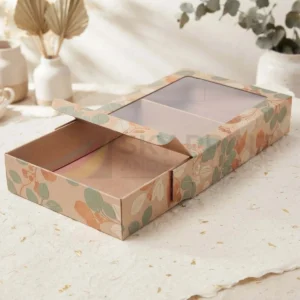
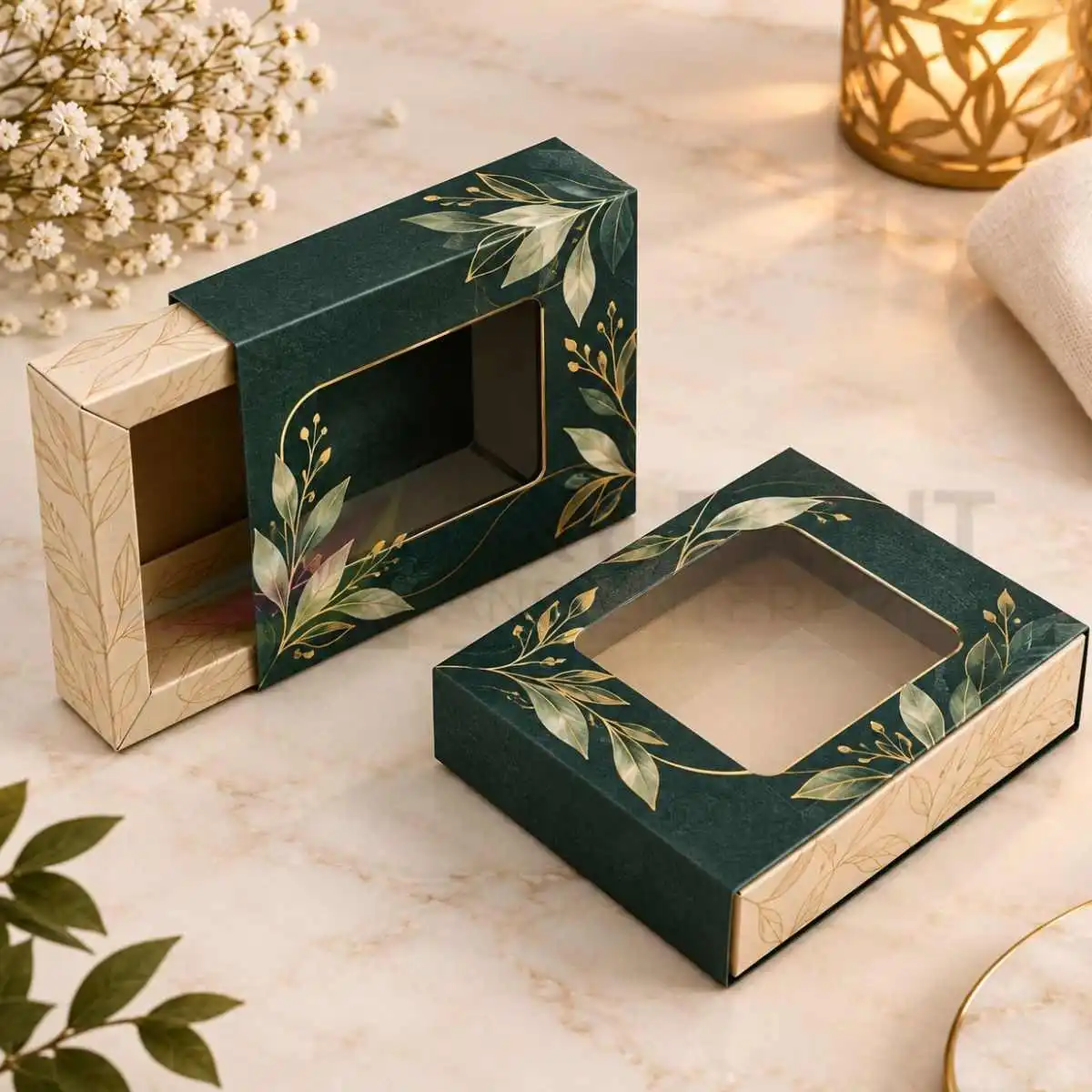
Printed die cut boxes combine precise construction with branded designs for a professional packaging finish.
You can also explore the technical background of
die cutting on Wikipedia
for general industry information.
Practical packaging insight:
Confirm product dimensions and structural requirements before finalising artwork. This approach can reduce revisions and helps the packaging design work correctly during production.
Custom Fit
A custom structure follows your product dimensions, helping control excess space and unnecessary packaging material.
Brand Presentation
Printed panels, windows, finishes, and structural details can turn functional packaging into a recognisable brand asset.
Production Flexibility
Businesses can select materials, dimensions, closures, inserts, print methods, and finishing options around their requirements.
Benefits of Custom Die Cut Packaging
Custom packaging should solve a practical problem as well as support your brand. Fortunately, a die cut box can address several requirements within one structure. The design can improve product fit, support efficient packing, create a stronger presentation, and provide space for branding.
1. Precise Product Fit
A package that is too large can leave unwanted movement around the product. Meanwhile, an overly tight package may make packing difficult. Custom dimensions create a more controlled fit. Therefore, businesses can plan internal space around the product, protective material, and handling requirements.
2. Better Product Protection
Product protection starts with structure. Inserts, dividers, reinforced panels, and suitable board grades can help keep products stable during storage and transportation. For fragile items, you can also combine a die cut box with
custom packaging inserts
.
3. Stronger Brand Visibility
Packaging often creates one of the first physical interactions between a customer and a brand. Custom colours, logos, patterns, product information, and finishing details can create a consistent visual identity. Moreover, distinctive structural elements can make the package easier to recognise.
4. Efficient Storage
Many paperboard packaging formats ship and store flat before assembly. Consequently, businesses can manage storage space more efficiently. Flat-packed packaging may also reduce the volume occupied before the boxes reach the packing or fulfilment stage.
5. Flexible Structural Features
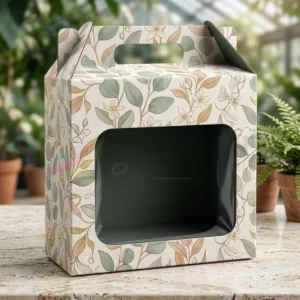
A custom dieline can accommodate useful features such as locking tabs, handles, hanging slots, windows, tear strips, and product openings. In addition, the structure can be adapted for different products within a packaging range.
Protection
Choose a board structure and internal support that match product weight, fragility, and delivery conditions.
Presentation
Use custom graphics, windows, foil, embossing, or spot UV to create a more distinctive presentation.
Efficiency
A well-engineered package can simplify packing, control excess space, and improve consistency across production runs.
Die Cut Box Styles and Structural Options
Packaging structure should reflect how the product will be packed, transported, displayed, and opened. Consequently, there is no single format that works for every business. Different structures provide different combinations of convenience, protection, presentation, and cost control.
Die Cut Mailer Boxes
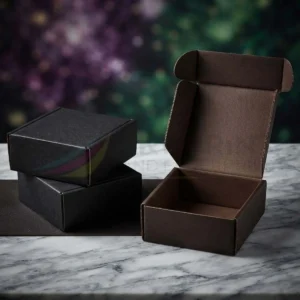
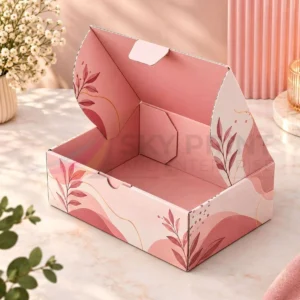
Mailer boxes are popular with e-commerce brands because the structure can include integrated locking flaps. The box can arrive flat and then assemble efficiently during fulfilment. As a result, businesses can create a branded delivery experience without adding a separate retail carton.
Die Cut Cardboard Boxes
Cardboard formats suit many lightweight and medium-weight products. They also provide a smooth surface for detailed printing. For additional information, see the
custom die cut cardboard boxes
range.
Corrugated Die Cut Packaging
Corrugated material includes a fluted layer between liner boards. This construction provides additional strength and cushioning. Therefore, businesses often select corrugated structures for delivery, heavier products, and applications that require additional resistance to handling.
Explore the
corrugated box range
for related packaging options.
Window Die Cut Boxes
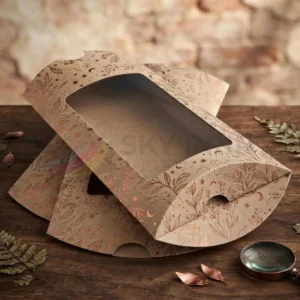
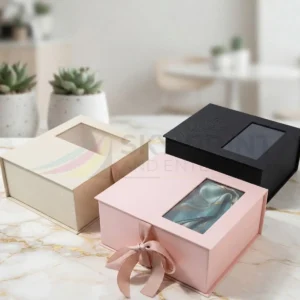
A window can give customers a direct view of the product without opening the package. This approach works particularly well for food, gifts, cosmetics, bakery products, and retail items where visual presentation matters.
Custom Folding Cartons
Folding cartons provide an efficient solution for retail packaging. They store flat, support detailed printing, and can accommodate several closure styles. In addition, they work well for production quantities where consistent dimensions matter.
| Structure | Best For | Main Advantage |
|---|---|---|
| Mailer Box | E-commerce and subscription products | Integrated closure and branded delivery experience |
| Cardboard Box | Retail and lightweight products | Print quality and versatility |
| Corrugated Box | Delivery and heavier products | Strength and cushioning |
| Window Box | Food, gifts, cosmetics, and retail | Product visibility |
Materials for Die Cut Packaging
Material selection affects packaging strength, print quality, appearance, weight, and overall performance. Therefore, UK businesses should consider the product and delivery environment before selecting a board grade.
Paperboard works well for lightweight retail products and printed cartons. Corrugated board provides more structural strength for delivery applications. Kraft board offers a natural appearance and can support packaging strategies where a paper-based look is preferred. Rigid board, meanwhile, creates a premium feel for luxury products and presentation boxes.
| Material | Best For | Key Advantages |
|---|---|---|
| Folding Carton Board | Retail and consumer products | Lightweight, printable, versatile |
| Corrugated Board | Delivery and heavier products | Strong, protective, stackable |
| Kraft Board | Natural-look and packaging-focused brands | Natural appearance and paper-based option |
| Rigid Board | Luxury and premium products | High rigidity and premium presentation |
How Board Thickness Affects Packaging
Board thickness influences rigidity, folding behaviour, durability, and perceived quality. A lightweight product may not require heavy board, while a fragile or high-value item may need additional structural support. For more guidance, review the
packaging card GSM guide
.
Furthermore, material selection should consider the finished size of the box. Larger panels may need stronger board to maintain shape. Smaller cartons can often use lighter stock when the product itself provides internal stability.
Printing and Finishing Options for Die Cut Box
Once the structure and material are confirmed, artwork and finishing can strengthen the packaging experience. Custom printing can display logos, product information, brand colours, patterns, instructions, and marketing messages across the available panels.
Digital printing works well for flexible production and shorter runs. Offset printing can suit larger commercial quantities that require consistent colour reproduction. The best method depends on order volume, artwork requirements, material, and budget.
Businesses can also review the printing and packaging guide
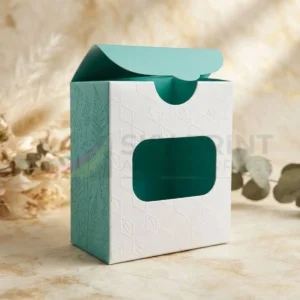
Make your packaging stand out with professionally printed die cut boxes tailored to your brand.
when comparing packaging print options.
Matte Finish
Creates a refined surface with reduced glare and a smooth professional appearance.
Gloss Finish
Adds a brighter surface that can make printed colours appear more vibrant.
Spot UV
Highlights selected graphics, logos, or text with a distinctive glossy effect.
Foiling
Adds metallic accents that work well for premium branding and gift packaging.
Embossing
Raises selected details to create a tactile brand element customers can feel.
Lamination
Adds a protective surface layer while changing the overall visual and tactile finish.
Sizes, Dimensions, and Specifications for Die Cut Box
A successful packaging design starts with accurate measurements. Share the product length, width, and height before the dieline is finalised. In addition, mention the product weight and any protective material that will sit inside the package.
The internal fit matters just as much as the outside dimensions. A box may look correct from the exterior while still allowing excessive product movement inside. Therefore, prototype testing can help confirm the fit before a full production run.
Information to Provide for a Custom Quote
- Product length, width, and height
- Approximate product weight
- Desired box style
- Estimated order quantity
- Preferred material
- Printing requirements
- Finishing preferences
- Insert or window requirements
- Delivery and fulfilment needs
How Die Cut Box Is Made
Professional packaging production follows a structured workflow. First, the product dimensions and packaging objectives are reviewed. Next, the structural design is converted into a dieline. After approval, the selected material can move through printing, cutting, creasing, folding, finishing, and quality control.
01. Product Review
The product size, weight, protection needs, and intended use guide the initial packaging recommendation.
02. Structural Design
The dieline defines panels, folds, tabs, openings, closures, and other structural features.
03. Artwork and Proof
Artwork is positioned against the approved structure so important graphics align correctly with folds and panels.
04. Production
The approved material moves through printing, die cutting, creasing, folding, finishing, and packing.
Quality Checks Matter
Packaging quality depends on more than print appearance. Edges, folds, dimensions, glue points, colour consistency, and structural performance all influence the finished result. Consequently, a quality-focused workflow checks both visual and functional details before delivery.
Sky Print and Enterprise can support packaging projects with proofs and structural guidance before production. For larger or more complex requirements, discussing product details early can help identify potential issues before manufacturing begins.
Industries That Use Die Cut Box
Custom packaging works across multiple industries because the structure can adapt to different products and customer expectations. However, each application requires a different balance between protection, presentation, cost, and functionality.
Die Cut Box for E-Commerce
Online brands need packaging that can handle parcel delivery while creating a strong unboxing experience. Mailer structures, inserts, and corrugated packaging can support these requirements. A branded box can also connect the physical delivery experience with the wider online brand identity.
Die Cut Box for Food and Bakery
Food brands often prioritise easy handling, product visibility, and suitable materials. Window structures can display bakery products, while sturdy cartons can support takeaway and delivery applications. Always confirm food-contact requirements for the specific application before production.
Die Cut Box for Cosmetics and Beauty
Cosmetics brands often use printed cartons, rigid packaging, inserts, foil, embossing, and spot UV. These details can create a premium presentation while keeping bottles, jars, and accessories organised.
Die Cut Box for Retail Products
Retail packaging must work on the shelf as well as during transportation. Custom windows, hanging tabs, strong graphics, and compact structures can help products stand out while remaining practical.
Gifts and Promotional Products
Gift packaging often places greater emphasis on presentation. A custom die cut structure can include decorative openings, premium finishes, handles, inserts, and branded messages.
Die Cut Box for UK E-Commerce
E-commerce packaging has to perform across several stages. The package may move from a warehouse shelf to a fulfilment station and then through a delivery network before reaching the customer. Therefore, the structure should balance protection, weight, dimensions, and presentation.
A fitted package can help control internal movement. At the same time, inserts can stabilise fragile products. For larger shipments, corrugated material can provide additional strength. Meanwhile, branded mailers can make the delivery part of the customer experience.
UK online retailers should also consider how quickly packaging can be assembled during fulfilment. A complicated structure may look impressive, yet it can slow down packing if every order requires extensive manual preparation. A practical design should therefore balance appearance with everyday usability.
Storage is another important consideration. Flat-packed packaging can occupy less space before assembly, which may help businesses organise their stock more efficiently. The final decision should still account for product dimensions, order volumes, available storage, and the packing process.
Packaging for the Fulfilment Workflow
Good packaging should be easy to store, quick to assemble, secure during packing, and appropriate for the delivery network.
When structural design and fulfilment requirements work together, businesses can create a smoother packing process while maintaining a professional presentation.
Sustainable Die Cut Box
Sustainable packaging decisions should consider the complete packaging system rather than one material feature alone. Board selection, package size, printing, coatings, inserts, delivery volume, and end-of-life options can all influence the overall packaging approach.
Right-sizing can reduce unnecessary material and empty space. In addition, paper-based packaging can support recycling systems when the chosen material and local waste infrastructure are compatible. Businesses should also review coatings, adhesives, windows, and mixed-material components before making environmental claims.
Kraft packaging provides a natural appearance and, therefore, works well for brands that want a simpler visual identity. For broader material guidance, explore the…
custom sustainable packaging
resource.
What Affects Die Cut Box Cost?
The cost of a custom packaging project depends on several connected factors. For example, box dimensions, material, structural complexity, printing, finishing, quantity, and additional components can all influence the final quotation.
In addition, larger packaging may require more material, while heavier board can increase material usage and production requirements. Similarly, complex structural features can require a more detailed dieline and additional production considerations.
Furthermore, printing and finishing also affect the specification. A simple printed carton may require fewer processes than a package with foil, embossing, spot UV, lamination, or a special window. Therefore, it is useful to define the visual requirements before comparing quotations.
Moreover, quantity can also influence production economics. For instance, larger production runs may be approached differently from smaller or flexible orders. Ultimately, rather than selecting packaging based only on the lowest initial price, consider the complete specification, including material, structure, print quality, functionality, and required quantity.
Box Size
Dimensions influence material usage, storage requirements, and the overall packaging structure.
Material
Board type and thickness affect strength, appearance, print performance, and production requirements.
Finishing
Special effects such as foil, embossing, spot UV, and lamination add further production processes.
How to Choose the Right Die Cut Box
Choosing packaging becomes easier when you evaluate the project in stages. Start with the product, then consider delivery, presentation, material, production quantity, and budget. This sequence helps prevent the common mistake of choosing a visual style before confirming structural requirements.
Start With Product Dimensions
Measure the product accurately, including any components that need to remain inside the package. If the product requires an insert, include the insert dimensions when planning the internal space.
Consider Delivery Conditions
Meanwhile, Products travelling through parcel networks may need more support than products sold directly from a retail counter. Consider distance, handling, stacking, product weight, and potential impact before selecting the board structure.
Match Packaging With Your Brand
A practical box can still communicate a strong visual identity. Select colours, typography, graphics, finishes, and structural details that match your existing brand guidelines. Consistency matters across product packaging, delivery materials, and promotional touchpoints.
Request a Prototype or Proof
A physical sample can reveal issues that are difficult to identify on a screen. Test the product fit, opening experience, closure, strength, print placement, and insert positioning before approving a large production run.
Product Fit
Confirm length, width, height, weight, and internal support requirements.
Delivery
Review handling, stacking, carrier conditions, and expected transit requirements.
Branding
Select artwork, printing, finishes, and structural features that support your brand identity.
Explore Related Packaging Resources
Packaging structure, material, printing, and finishing decisions often work together. Therefore, reviewing related resources can help you plan a complete packaging solution instead of treating the box as an isolated component.
Box Styles Guide
Compare different packaging structures and understand which formats suit different products and customer experiences.
Packaging Inserts
Add internal support, separation, and presentation features to help keep products stable inside the package.
Packaging Card GSM Guide
Understand how board weight can influence packaging strength, feel, printing, and overall performance.
Printing and Packaging Guide
Review practical considerations for packaging print methods, artwork, and finishing options.
Die Cut Cardboard Boxes
Explore a dedicated product range for custom die cut cardboard packaging and retail applications.
Corrugated Boxes
Consider corrugated structures when your products need additional protection during delivery and handling.
Packaging Expertise That Starts With the Product
Effective packaging does not start with artwork. It starts with the product, its dimensions, its weight, its handling requirements, and the customer experience you want to create.
Sky Print and Enterprise approaches custom packaging by considering structure, material, printing, finishing, and practical use together. This helps businesses avoid unnecessary redesigns and select packaging that works beyond the visual concept.
Frequently Asked Questions About Die Cut Boxes
What is a die cut box?
It is a custom box cut and creased from a specific dieline to create the required shape, dimensions, folds, and closures.
Can I customise the size and shape?
Yes. Custom dimensions and structural features can be planned around your product and packaging requirements.
Are die cut boxes good for e-commerce?
Yes. Mailer and corrugated structures can support product protection, efficient packing, and branded delivery experiences.
What materials can I use?
Common options include folding carton board, kraft board, corrugated board, and rigid board, depending on the application.
Can I add premium finishes?
Yes. Options can include matte or gloss finishes, spot UV, foil, embossing, debossing, and lamination.
Ready to Create Custom Die Cut Packaging?
Share your product dimensions, quantity, preferred material, artwork requirements, and packaging goals with Sky Print and Enterprise. Our team can help you move from the initial concept to a practical custom packaging solution for your UK business.

Biodegradable

Compostable

Recyclable

Plastic Free

Flute